Visual Testing Best Practices for Web Applications
Build reliable visual regression checks with Playwright: control rendering conditions, review baselines deliberately, and keep screenshot tests in their proper role.
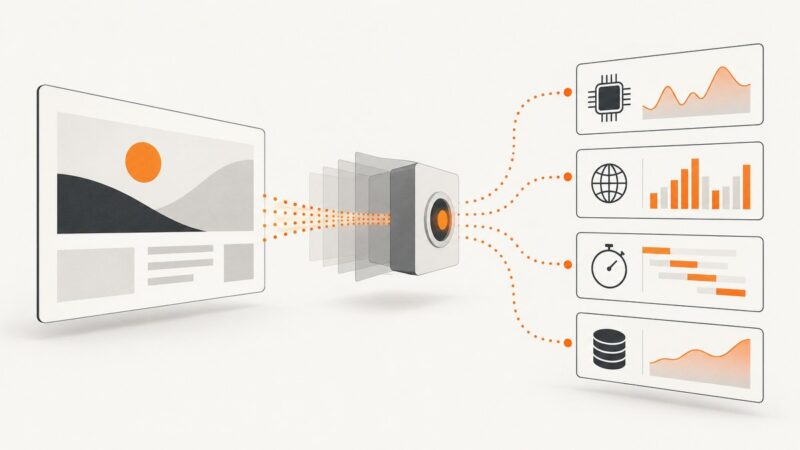
Visual testing checks whether a page renders as expected by comparing a new screenshot with an approved reference image. With Playwright Test, use toHaveScreenshot(): the first run creates a baseline, and later runs report visual differences. Reliable results depend on repeatable application state and a consistent rendering environment. A screenshot comparison can reveal appearance changes, but it does not prove that the application works correctly or meets accessibility requirements.
This guide uses Playwright for the test suite workflow. Later, it shows how ScreenshotNeo can capture pages when you need a screenshot without managing browser setup.
1. Choose meaningful pages and states
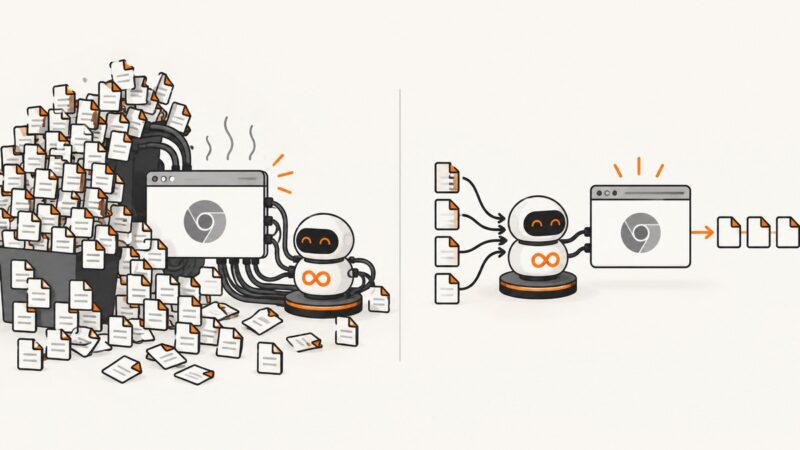
Start with user-visible screens where an appearance change would matter: a key landing page, a high-value flow, an important error or empty state, or a responsive layout. Include states such as signed-in versus signed-out only when they represent distinct experiences you need to protect.
Prefer a focused set of meaningful checks to arbitrary screenshots of every route. There is no universal quota for pages or viewports; choose coverage based on product risk and the effort needed to review differences. Decide whether each test should capture a full page, a key region, or a component. A full-page image can catch broad layout shifts; a focused screenshot can make a component change easier to diagnose.
2. Set up a Playwright screenshot test
Install Playwright Test and its browser binaries using the official Playwright installation instructions. Add a test file such as tests/visual.spec.ts:
import { test, expect } from '@playwright/test';

test('pricing page matches its approved appearance', async ({ page }) => {
  await page.goto('http://127.0.0.1:3000/pricing');
  await expect(page.getByRole('heading', { name: 'Plans' })).toBeVisible();
  await expect(page).toHaveScreenshot('pricing-page.png', {
    fullPage: true,
  });
});
Run it in the same project and environment you will use for future comparisons:
npx playwright test tests/visual.spec.tsOn the first run, Playwright creates the reference screenshot. Review it, then commit the generated snapshot with the test suite. On subsequent runs, Playwright compares the rendered screenshot with that reference and reports a mismatch. The exact snapshot folder layout depends on the test and project configuration.
Use explicit readiness assertions for the content that matters. A navigation completing does not necessarily mean that application data, fonts, or images have finished rendering. Avoid adding arbitrary delays as a substitute for waiting on meaningful page state.
3. Make each capture repeatable
Visual comparisons only tell a useful story when the test controls the conditions that produce the image. Playwright notes that browser rendering can vary with host operating system, version, settings, hardware, power source, and headless mode. Its guidance recommends using the same environment that generated the references and matching browser and operating-system versions.
- Pin the rendering context: use the same operating system, Playwright/browser version, browser project, viewport, and relevant browser settings when creating and checking snapshots.
- Control application state: set up known test data and authentication state, and reset mutable state between tests where needed.
- Control time-dependent output: freeze or set dates and avoid content that changes on every render, such as rotating promotions or randomized identifiers.
- Handle animation deliberately: wait for transitions to finish or disable animations in the test when motion itself is not under review.
- Stabilize external dependencies: avoid depending on uncontrolled third-party pages, live ads, or remote data. Use controlled fixtures or a predictable test environment where possible.
- Keep capture size intentional: set the viewport and choose full-page or component capture to match the behavior under test.
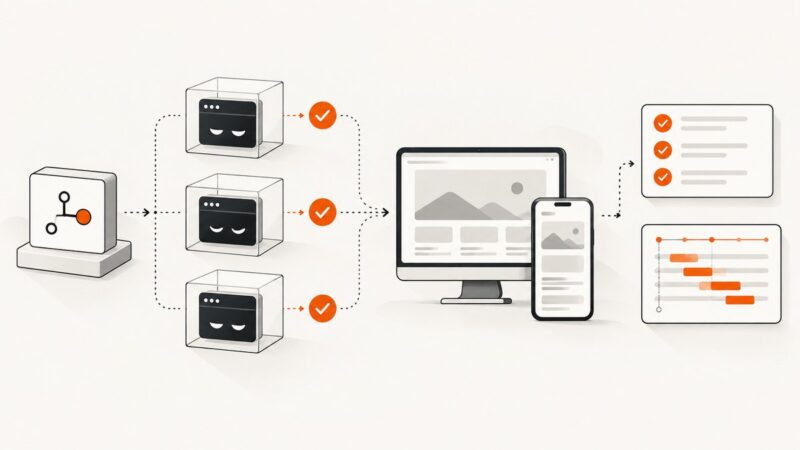
If the product must look correct in more than one browser, viewport, or operating system, add those rendering contexts intentionally. They may produce legitimately different references, so keep the expected outputs organized by the relevant Playwright project or test configuration. More contexts improve coverage but also add baselines to maintain and review.
4. Review differences and update baselines carefully
When a comparison fails, inspect the expected image, actual image, and diff before deciding what to do. Ask whether the change is an unintended regression, an expected design update, or rendering noise caused by a changed environment or unstable content.
- Open the failure artifacts and identify the changed area.
- Check whether the page state and rendering environment match the baseline run.
- If the difference is unintended, fix the application or test setup and rerun the check.
- If the design change is intended, review and approve the new appearance, then update the snapshot with
npx playwright test --update-snapshots. - Commit the baseline update with the application change and enough context for reviewers to understand why it changed.
Do not update references automatically just to make a failing build pass. A baseline is approved output; replacing it without review can make a real regression look accepted.
5. Choose comparison sensitivity in context
Playwright supports screenshot comparison options including a per-pixel threshold and a maximum number of differing pixels. These let a team tolerate small rendering variation, but a permissive setting can also hide a meaningful change. There is no universally correct threshold in the official guidance.
Start with the default behavior, then adjust only when you have a specific, understood source of stable noise. Evaluate any change against both expected rendering variation and the defects you want the test to catch. Keep the setting local to the relevant assertion when possible, and review threshold changes like other test logic.
For example, an assertion can specify a maximum number of differing pixels:
await expect(page).toHaveScreenshot('pricing-page.png', {
  fullPage: true,
  maxDiffPixels: 20,
});
Treat that number as an example of configuration syntax, not a recommended universal value. A small icon and a large page need different review judgments; validate a tolerance against your own pages.
6. Keep visual checks alongside functional and accessibility checks
A matching screenshot cannot establish that buttons work, calculations are correct, links navigate properly, or content is current. Keep behavior assertions and data checks as separate evidence in the test suite.
Visual comparison is not an accessibility conformance test either. W3C WAI says that no evaluation tool alone can determine whether a site meets accessibility standards; knowledgeable human evaluation is required. WCAG conformance evaluation combines automated checks with human evaluation, and usability testing should include people with disabilities. For a structured assessment, W3C’s WCAG-EM overview describes defining scope, exploring the product, selecting representative pages, evaluating them, and reporting findings.
7. Preserve useful CI failure evidence
When visual tests fail in continuous integration, retain the expected, actual, and difference images so reviewers can diagnose the change. Playwright’s best-practice guidance also discusses trace capture for debugging CI failures. Traces can help explain what the page was doing, but recording every test can be expensive; capture them according to the needs of your failure workflow.
Run reference creation and comparison in the same CI image or other stable environment where practical. If a baseline was produced on a developer laptop but CI uses a different operating system or browser build, differences may reflect the environment rather than the code change.
How do I stop screenshot tests from being flaky?
- Use a stable browser and operating-system environment for both baseline and comparison runs.
- Wait for the specific content under test to appear, rather than relying on navigation completion alone.
- Use controlled test data and state; remove dependence on randomized or frequently changing third-party content.
- Settle or disable animation when motion is not the subject of the test.
- Investigate the actual diff before changing thresholds or replacing a reference image.
- Keep viewport, browser project, and relevant rendering settings consistent.
If failures persist, compare the CI and baseline environments and inspect trace or screenshot artifacts before changing the application assertion.
Or skip the browser setup
For a one-off capture or a workflow that does not need an in-suite Playwright assertion, ScreenshotNeo returns a screenshot from one API request. It is a capture API and MCP server, not a replacement for a versioned visual regression test suite: keep approved baselines and diff review in your testing workflow.
See the ScreenshotNeo API documentation for request options. This cURL example saves a WebP screenshot:
curl -G "https://api.screenshotneo.com/v1/shot" -d access_key=YOUR_API_KEY --data-urlencode url=https://stripe.com -o shot.webpPython:
import requests

r = requests.get(
    "https://api.screenshotneo.com/v1/shot",
    params={"access_key": "YOUR_API_KEY", "url": "https://stripe.com"},
    timeout=90,
)
open("shot.webp", "wb").write(r.content)
Node.js:
const q = new URLSearchParams({ access_key: 'YOUR_API_KEY', url: 'https://stripe.com' });
const res = await fetch(`https://api.screenshotneo.com/v1/shot?${q}`);
if (!res.ok) throw new Error(`Screenshot request failed: ${res.status}`);
await Bun.write('shot.webp', new Uint8Array(await res.arrayBuffer()));
ScreenshotNeo removes cookie banners, popups, and chat widgets before the shot. Bot checks, blank pages, and failed loads are never billed. Its MCP server lets AI agents take screenshots. The free plan includes 1,000 screenshots a month with no card; paid plans start at $5 for 3,000. Sign up for free and get 1,000 screenshots a month with no card.
Performance, reliability, and cost
Visual test cost comes from running the application and browser in each rendering context, storing snapshots and failure artifacts, and reviewing changes. Start with the high-value pages and states, then add coverage where risk justifies the maintenance. Additional browsers and viewports create more comparisons and baselines to manage.
Reliability depends on repeatability and deliberate baseline ownership. Keep references with the test suite or use a review workflow appropriate to the team; in either case, make changed references reviewable. Preserve diagnostic artifacts for failures and avoid treating a pixel diff as an automatic verdict on product correctness.
ScreenshotNeo pricing is Free for 1,000 shots per month, Starter $5 for 3,000, Growth $15 for 15,000, Pro $39 for 60,000, Scale $99 for 250,000, and Business $249 for 1,000,000; yearly billing gives two months free. Every feature is on every plan. Only clean shots are billed: bot checks or CAPTCHAs, blank pages, timeouts, failed loads, and cache hits cost nothing, and each response includes X-Page-Verdict and X-Billed headers. Use these captures where an API capture suits the task; keep visual regression decisions tied to approved references and review.
Common errors and fixes
| Symptom | Likely cause | What to do |
|---|---|---|
| Many pixels differ after a small code change | Browser, operating system, settings, or headless mode changed | Run with the environment that generated the baseline, then regenerate references only if the new environment is intentional. |
| Text or images are missing in the captured page | The assertion ran before relevant content finished rendering | Wait for a specific heading, image, or application-ready condition before the screenshot assertion. |
| A snapshot changed on every run | Uncontrolled state, animation, time, randomized data, or third-party content | Control the test data and state, settle animations, and remove or stub unstable dependencies. |
| Updating snapshots makes the failure disappear, but reviewers cannot explain why | References were replaced without examining the diff | Inspect expected, actual, and diff images first; update only for an intentional, reviewed design change. |
| A tolerance hides a visible defect | Pixel threshold or maximum-difference allowance is too permissive | Reduce or remove the tolerance and validate the setting against representative pages and defects. |
| CI fails but local runs pass | Local and CI rendering environments or application data differ | Compare browser and operating-system versions, viewport, test state, and available failure artifacts. |
FAQ
Should I use one baseline for every browser?
Use references that match the rendering contexts you intend to support. When browser or operating-system differences are part of the requirement, test them as separate contexts and manage the corresponding expected output.
Does a passing visual test mean a page is accessible?
No. It checks rendered appearance against an image. Accessibility evaluation needs appropriate automated checks and knowledgeable human evaluation.
Should every route have a screenshot test?
There is no universal route count. Prioritize representative pages and states where an unintended visual change would matter, and expand coverage based on product risk.
Can ScreenshotNeo replace Playwright visual regression tests?
It can capture pages through an API or MCP server, but a screenshot by itself is not a baseline comparison. Use a workflow that stores approved references and reviews differences for regression checks.
Sources
- Playwright: Visual comparisons — screenshot assertions, baseline behavior, environment variation, and diff options.
- Playwright: Best Practices — user-visible testing, isolation, controlled dependencies, and debugging guidance.
- W3C WAI: Evaluating Web Accessibility Overview — why tools alone cannot determine conformance.
- W3C WAI: WCAG-EM Overview — stages for evaluating conformance.
- W3C WAI: Understanding Conformance — automated and human evaluation and user testing.