BlogScreenshots on your device
How to Capture a Website Screenshot at 1366×768 on a Windows Laptop in India
Capture a website on a Windows laptop, choose the right method for 1366×768, and verify the saved image’s actual pixel dimensions.
To capture a website at 1366×768 on a Windows laptop, first decide whether you need a screenshot of the visible screen, a webpage-only capture, or an image file whose pixel dimensions are exactly 1366×768. These are different results. If 1366×768 is available in Windows display settings, choosing it sets the display resolution; it does not guarantee every screenshot file will have those dimensions. For a strict deliverable, capture the view you want and check the saved file’s width and height.
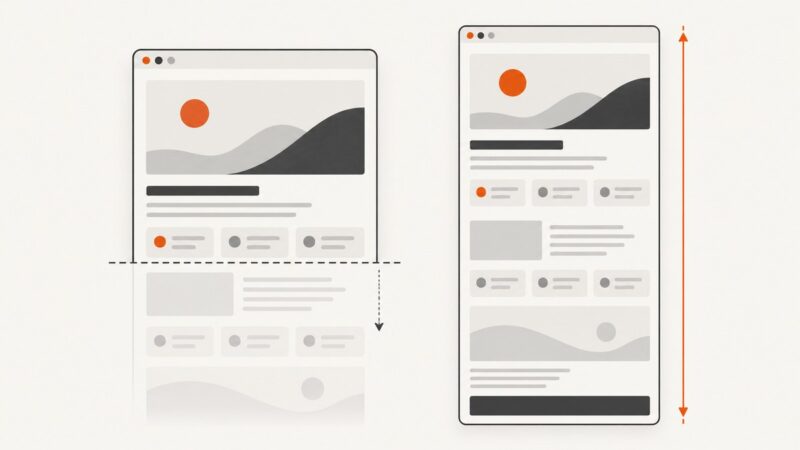
For a quick selection from the screen, press Windows+Shift+S. For a webpage-only capture in Microsoft Edge, press Ctrl+Shift+S and select an area or the full page. Use the full-page option only when you want content below the fold: that image may be much taller than 768 pixels.
1. Choose what “1366×768” means
Before capturing, use this checklist:
- Visible screen: You want the desktop or browser as it appears on the laptop display. A full-screen capture includes the desktop and browser chrome.
- Webpage viewport: You want the website content currently visible in the browser, without the rest of the desktop. Edge’s webpage capture or browser developer tools are a better fit.
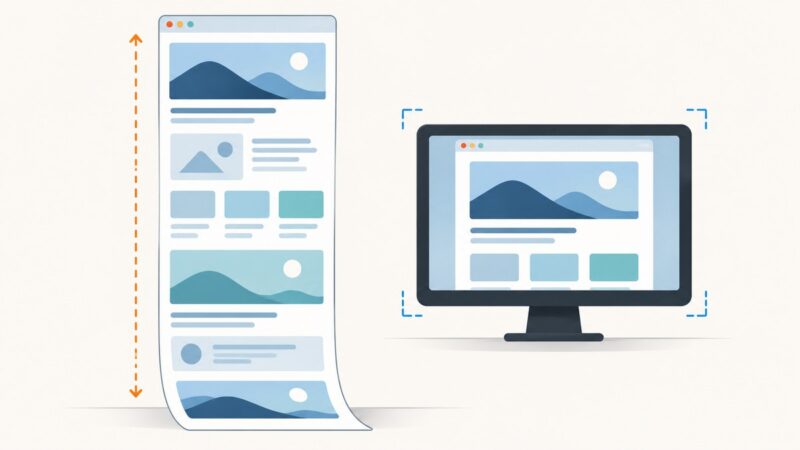
- Full webpage: You want the entire vertically scrolling page. The image will usually be taller than the visible viewport, so it is not a 1366×768 screenshot.
- Exact output file: The image must be exactly 1366 pixels wide and 768 pixels high. Capture the intended composition, then verify dimensions and crop or resize if needed.
Windows resolution describes the display mode available to Windows. A screenshot’s dimensions also depend on the capture area, browser chrome, scaling, zoom, and whether the capture includes the full page. Microsoft recommends using the resolution marked “Recommended” for the display; 1366×768 may not be offered on every laptop display. Microsoft’s display resolution guidance explains the setting and its trade-offs.
2. Set the Windows display resolution if available
- Open Start > Settings > System > Display.
- Select the laptop display if more than one display is listed.
- Open Display resolution and check whether 1366 × 768 is available.
- If it is available and appropriate for your task, select it and confirm the change. If it is not available, do not assume the laptop can use that mode; use the browser viewport or image editing workflow below instead.
A lower-than-native resolution can make text less sharp or make the image appear small, centered, bordered, or stretched. Prefer the setting marked Recommended unless your task specifically requires 1366×768. Changing display resolution helps control a whole-screen capture, but it does not set the dimensions of a selected region or a full-page webpage image.
3. Prepare the browser view
Open the target website and arrange the page before capturing:
- Use Ctrl+0 in Edge to return page zoom to its default level. Ctrl++ and Ctrl+- adjust zoom when the composition needs to change.
- Use F11 to toggle Edge full-screen mode. This changes whether browser chrome is visible in a screen capture.
- Wait for the page to finish loading and for images or other content you need to appear.
- Close unrelated tabs, menus, or overlays if the screenshot is meant to show only the page.
Zoom and full-screen mode change what fits in the capture. They do not establish that the saved image is exactly 1366×768. See Microsoft Edge’s accessibility and keyboard guidance for its zoom shortcuts.
4. Capture the website with Windows or Edge
Method A: Select a visible screen region
- Press Windows+Shift+S.
- Choose the rectangular snip option if it is not already selected.
- Drag around the website area you want to capture.
- Open the Snipping Tool notification or app to review the snip, then save it.
This is useful for capturing a portion of the browser or screen. The saved dimensions depend on the rectangle you select. Microsoft describes Snipping Tool as a way to copy words or images from all or part of the PC screen. See Microsoft’s Snipping Tool instructions.
Method B: Capture the full display
- Arrange the desktop and browser as you want them to appear.
- Press Windows+PrtScn.
- Find the screenshot under Pictures\Screenshots.
- Open the image and verify its dimensions if they must be exact.
This captures the whole display, including browser chrome and anything else visible on the desktop. On some keyboards without a Print Screen key, Microsoft documents Fn+Windows+Space as an alternative. See Microsoft’s Print Screen shortcut guidance.
Method C: Capture webpage content in Edge
- Open the webpage in Microsoft Edge.
- Press Ctrl+Shift+S.
- Choose Capture area for a selected portion, or Capture full page for the entire webpage.
- Review the result and save it.
A full-page screenshot includes content beyond the visible laptop screen. It may be much taller than 768 pixels and should not be treated as a 1366×768 viewport image. Edge’s steps are documented in Microsoft’s webpage screenshot guide.
5. Use Edge DevTools for a controlled viewport
For a developer-controlled page viewport, Edge DevTools provides device emulation and screenshot capture. This is useful when you need to inspect how a page renders at a particular viewport size rather than capture the laptop’s physical screen.
- Open the page in Edge and open DevTools with F12 or Ctrl+Shift+I.
- Turn on the device emulation toolbar from DevTools’ device toggle control.
- Set the emulated viewport width to 1366 and height to 768.
- Open DevTools’ More options menu and choose Capture screenshot for the current viewport, or Capture a full size screenshot for the entire page.
- Inspect the downloaded image’s pixel dimensions. A full-size screenshot is expected to be taller than the viewport when the page scrolls.
Device emulation controls the browser’s emulated viewport and related device settings; it is not a change to the laptop panel’s physical resolution. Consult Microsoft Learn’s Edge device emulation documentation for the current controls.
6. Verify the saved image dimensions
Do not infer the output size from the Windows setting or the dimensions you intended to select. Open the image’s properties or inspect it in an image editor and confirm its width and height in pixels.
- If the file is exactly 1366 × 768, it meets that pixel-size requirement.
- If it is smaller, larger, or has a different aspect ratio, crop or resize it in an image editor while preserving the content that matters.
- If the capture is a full page, decide whether a tall image is actually required. Cropping or resizing a full-page image to 1366×768 will omit or shrink page content.
For a webpage viewport image, browser chrome is excluded. For a full-screen image, it is included. For a selected snip, the selection boundaries determine the result. Windows scaling and browser zoom can also affect the rendered view, which is why checking the actual file is the reliable final step.
7. Troubleshooting
| Problem | Likely cause | What to do |
|---|---|---|
| 1366×768 is missing from Display resolution | The selected display or its supported modes do not offer that resolution. | Use the Recommended setting, then control the browser viewport with Edge DevTools if the task is about page rendering. Verify the resulting file dimensions. |
| The saved screenshot is not 1366×768 | A region selection, browser chrome, scaling, or full-page capture changed the output bounds. | Check the image’s pixel dimensions. Recapture with the needed method or crop/resize the file to the required dimensions. |
| The full-page image is much taller than expected | Capture full page includes content below the current viewport. | Use Capture area or a viewport screenshot if the required output is a screen-sized image. |
| Text looks blurry or stretched | The display may be using a non-native resolution, or the image may have been resized. | Return to the Recommended display resolution when possible. If exact output dimensions are mandatory, resize carefully and inspect text at the final size. |
| The Print Screen shortcut does nothing | The keyboard may lack a dedicated PrtScn key or require a function modifier. | Use Windows+Shift+S, or try the documented Fn+Windows+Space combination on supported keyboards. |
| The screenshot contains browser bars or desktop items | A full-display capture includes everything visible on the screen. | Use Edge webpage capture or select only the page area with the snipping tool. |
| A menu or banner covers the page | The site or browser displayed an overlay during capture. | Dismiss the overlay if appropriate, wait for the page to settle, and capture again. For automated captures, configure the capture workflow to wait for the page and hide unwanted elements. |
8. Performance, reliability, and cost
The built-in Windows and Edge methods need no screenshot API setup or paid service for a one-off manual capture. A manual screenshot is straightforward, but repeating it across many URLs or needing consistent viewport settings takes repeated browser work. DevTools emulation makes the viewport more controlled, while a full-page capture can take longer on pages with substantial content or delayed images.
For repeatable developer workflows, use a browser automation tool or a screenshot API and explicitly set the viewport and capture mode. In either case, account for page load delays, lazy-loaded images, cookie banners, and other overlays. Check the result dimensions and page content; a successful file download does not by itself prove that the site rendered correctly. Avoid assuming that a full-page screenshot has screen-sized dimensions or that a display resolution guarantees an identical image file.
Or skip the browser setup
ScreenshotNeo is a website screenshot API and MCP server. One GET request can return a PNG, JPEG, WebP, or PDF. Set the viewport to 1366×768 for a viewport capture; the API also supports full-page capture when you need the whole page. See the ScreenshotNeo API documentation for parameters and options.
curl -G "https://api.screenshotneo.com/v1/shot" -d access_key=YOUR_API_KEY --data-urlencode url=https://stripe.com --data-urlencode width=1366 --data-urlencode height=768 -o shot.webpimport requests
r = requests.get(
"https://api.screenshotneo.com/v1/shot",
params={
"access_key": "YOUR_API_KEY",
"url": "https://stripe.com",
"width": 1366,
"height": 768,
},
timeout=90,
)
r.raise_for_status()
open("shot.webp", "wb").write(r.content)const q = new URLSearchParams({
access_key: 'YOUR_API_KEY',
url: 'https://stripe.com',
width: '1366',
height: '768',
});
const res = await fetch(`https://api.screenshotneo.com/v1/shot?${q}`);
if (!res.ok) throw new Error(`Screenshot request failed: ${res.status}`);
const image = Buffer.from(await res.arrayBuffer());
await import('node:fs/promises').then(fs => fs.writeFile('shot.webp', image));With ScreenshotNeo, cookie banners are accepted and removed before the shot, along with supported newsletter popups and chat widgets; each step can be turned off. Bot checks, blank pages, failed loads, timeouts, and cache hits are not billed, and response headers say which outcome occurred. Its MCP server gives AI agents tools to take screenshots, get page information, and capture PDFs. The Free plan includes 1,000 screenshots a month with no card; paid plans start at $5 for 3,000. Sign up for 1,000 free screenshots a month, with no card required.
FAQ
Can I make a screenshot exactly 1366×768 if Windows does not offer that resolution?
Yes, if your capture workflow lets you control the browser viewport or you crop and resize the saved image afterward. The display mode itself is not required for an image file to have those pixel dimensions.
Will a full-page screenshot be 1366×768?
Usually not when the webpage extends below the viewport. Full-page capture includes that additional vertical content, so check the output dimensions.
Does this workflow change for a Windows laptop in India?
The Windows and Edge steps are the same. The available display resolutions depend on the laptop display, not the country.
Which capture should I choose for a web design handoff?
Use a 1366×768 viewport capture when the handoff specifies that viewport. Use a full-page capture only when reviewers need the complete page, and label or preserve its actual dimensions.