BlogScreenshots on your device
How to capture a website screenshot on a low-cost Windows laptop for a project report
Capture the visible page with Windows Snipping Tool, or use Microsoft Edge for a full webpage. Learn how to save, check, and add the image to a report.
For the part of a webpage visible on screen, press Windows key + Shift + S, select the area, then save the snip or paste it into your report. For a page that continues below the screen, use Microsoft Edge’s Screenshot or Web Capture feature and choose full-page capture. Both options use built-in Windows or browser features; a dedicated screenshot app or expensive laptop is not required for this task.
1. Capture the visible part of a webpage
- Open the webpage in your browser and arrange it so the relevant content and enough page context are visible. Close or move anything private that should not appear in the report.
- Press Windows + Shift + S. Microsoft says this opens the Snipping Tool overlay. [Microsoft Support: Use Snipping Tool to capture screenshots]
- Choose the available snip mode, such as a rectangular selection, and drag around the webpage area you need.
- Select the Snipping Tool notification or editor if it appears. Save the image, or copy it and paste it into your report. Windows guidance lists saving in PNG or JPG and copying to the clipboard. [Microsoft: How to use Snipping Tool on Windows 11]
- Give the file a descriptive name, then inspect it at the size it will appear in the report. Make sure text remains readable and the image shows enough context to identify what it supports.
If the shortcut does nothing, open Start and search for Snipping Tool. Keyboard behavior can depend on the Windows version, keyboard and laptop hardware.
2. Capture an entire scrolling webpage
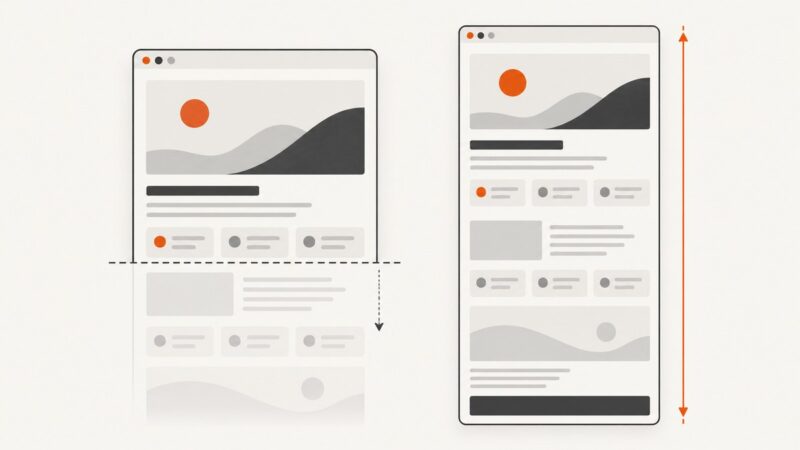
A normal screen snip only captures what is currently on screen. To include content farther down the page, use Microsoft Edge’s Screenshot or Web Capture tool and choose its full-page option. Microsoft’s Edge feature description says it can capture a whole webpage beyond the screen or a selected area. [Microsoft Edge: Screenshot Tool]
- Open the page in Microsoft Edge and wait for its content to appear.
- Open Edge’s Screenshot or Web Capture feature from the browser interface. The precise menu placement can vary by version.
- Choose the full-page capture option to include content below the visible screen, or select an area if you only need one section.
- Review the result, then save or copy it using the available controls.
Long pages may produce a tall image. If its text becomes too small when inserted into the report, capture relevant sections separately and label them clearly, provided your assignment allows that approach.
3. Choose the right capture method
| Method | What it captures | Where the result goes | Use it when |
|---|---|---|---|
| Windows + Shift + S | A selected screen area | Snipping Tool editor or clipboard; save from the editor | You need a readable section of a page |
| Windows + PrtScn | The full screen | Pictures\Screenshots | Showing the browser along with desktop context is useful |
| Alt + PrtScn | The active window | Clipboard; paste into a document or image app | You want the browser window without the whole desktop |
| Edge full-page Screenshot/Web Capture | The webpage beyond the visible screen | Use the browser capture controls to save or copy | The page extends below the fold |
Microsoft documents Windows + PrtScn as a full-screen capture saved in the Pictures\Screenshots folder, and Alt + PrtScn as a way to copy the active window. [Microsoft Support: Keyboard shortcuts in Windows]
If your device has no PrtScn key, Microsoft’s support guidance gives Fn + Windows + Space as an option on some devices. Its behavior depends on the hardware. [Microsoft Support: Snipping Tool]
4. Add the screenshot to your project report
- Insert the saved image or paste the clipboard capture into the report.
- Resize it while keeping its proportions. Check that important text remains legible at normal viewing size.
- Add a caption or source attribution if your assignment requires one. A screenshot does not automatically satisfy citation, copyright or project requirements.
- Before submission, check that the image does not reveal account names, email addresses, private tabs or other information that should stay private.
5. Troubleshooting
| Problem | Likely cause | What to do |
|---|---|---|
| Windows + Shift + S does nothing | The shortcut or Snipping Tool may behave differently on this Windows version or keyboard. | Search Start for Snipping Tool and open it directly. Check whether your keyboard needs an Fn key for special functions. |
| The screenshot seems to disappear | A snip may have been copied to the clipboard or opened through a notification instead of being saved automatically. | Look for the Snipping Tool notification/editor and use its save control. If you copied the image, paste it into the report or an image app. |
| The capture cuts off content below the screen | A screen snip records only the visible area. | Use Edge’s full-page capture for scrolling webpage content. |
| PrtScn does not work as expected | The key may be absent, share a function with another key, or have hardware-specific behavior. | Use Windows + Shift + S, or try Fn + Windows + Space on a device without a PrtScn key. |
| The image is hard to read in the report | The capture includes too much content or was scaled down too far. | Capture a smaller relevant region, increase the image’s display size, or split a long page into sections if allowed. |
6. Keep the capture reliable and lightweight
Built-in capture is a practical fit for a one-off report screenshot: it avoids installing a dedicated capture tool and works with the laptop you already have. The cited Windows and Edge guidance does not provide speed benchmarks, so there is no basis here for promising a particular capture time or performance on a low-cost laptop.
For a clean result, wait until the page has loaded, use a region capture for a short section and reserve full-page capture for content that actually extends below the screen. Save only the format and resolution your report needs, and keep the source page URL available for any required attribution.
Or skip the browser setup
ScreenshotNeo is a website screenshot API and MCP server. Its API can return an image or PDF from one GET request; the API documentation describes its options. This is useful when you need repeatable captures from code or want an AI agent using an MCP client to take a screenshot.
curl -G "https://api.screenshotneo.com/v1/shot" -d access_key=YOUR_API_KEY --data-urlencode url=https://stripe.com -o shot.webpimport requests
r = requests.get("https://api.screenshotneo.com/v1/shot", params={"access_key": "YOUR_API_KEY", "url": "https://stripe.com"}, timeout=90)
open("shot.webp", "wb").write(r.content)const q = new URLSearchParams({ access_key: 'YOUR_API_KEY', url: 'https://stripe.com' });
const res = await fetch(`https://api.screenshotneo.com/v1/shot?${q}`);ScreenshotNeo removes cookie banners, popups and chat widgets before the shot. Bot checks, blank pages and failed loads are never billed, and response headers report the page verdict and billing status. Its MCP server lets AI agents take screenshots. The free plan includes 1,000 screenshots a month with no card; paid plans start at $5 for 3,000 screenshots.
Sign up free for 1,000 screenshots a month, with no card required.
FAQ
How do I screenshot a webpage on a Windows laptop?
Press Windows + Shift + S and select the visible area you need, then save the snip or paste it into your report.
How do I capture an entire webpage, including what is below the fold?
Use Microsoft Edge’s Screenshot or Web Capture feature and select full-page capture. A standard screen snip only captures what is visible.
Where does Windows save my screenshot?
Windows + PrtScn saves a full-screen capture in Pictures\Screenshots. A Snipping Tool capture may need to be saved from its editor, while clipboard captures must be pasted into an app.