What Are Web Agents? How AI Agents Use Websites
Web agents use browsers and website tools to read pages and take actions for people. Learn how they work, where their limits are, and how to build them safely.
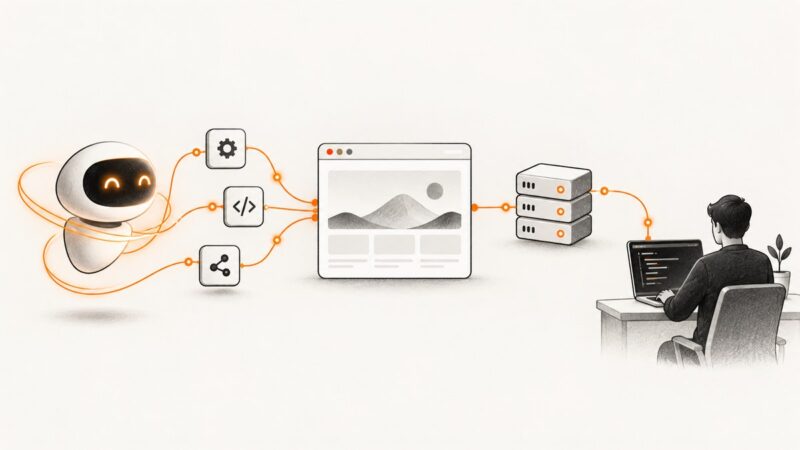
What are web agents? They are software systems that interact with websites on a person’s behalf. An AI web agent combines a model or decision system with browser access or website-provided tools, then uses permitted actions—such as reading a page, navigating, clicking, or entering text—to help complete a requested task.
The phrase has a broad standards meaning and a narrower everyday meaning. The W3C uses web user agent for software that interacts with websites on a user’s behalf, including browsers and potentially search engines, voice assistants, and generative AI systems. People often use web agent more narrowly for an AI system that navigates or acts on websites. The practical guide below focuses on that narrower use. W3C: Web User Agents
How AI agents use websites
A web agent needs a way to observe a site and a set of actions it is allowed to take. A typical interaction follows this loop:
- Receive a goal: for example, find a return policy or prepare a draft form.
- Inspect the site: retrieve page content or use browser access to inspect the rendered page and its state.
- Choose a permitted action: navigate, click, enter text, or call a structured website tool.
- Observe the result: check the updated page or tool response to decide what to do next.
- Stop or request approval: finish the read-only task, or pause before a consequential action when the workflow requires human confirmation.
The loop may repeat across several pages. Browser tooling can expose the DOM, JavaScript execution, screenshots, and network or console state, which can help when content appears only after scripts run. These capabilities depend on the agent and its browser tools; they are not available or reliable in every implementation. Cloudflare Browser Rendering documentation
Two ways to interact: inferred controls and declared tools
With ordinary browser interaction, the agent observes a rendered page and infers what controls mean. It may identify a search box, button, or link and then operate it much as a person would. This approach can work across sites, but page changes, ambiguous labels, overlays, and dynamic content can make control selection difficult.
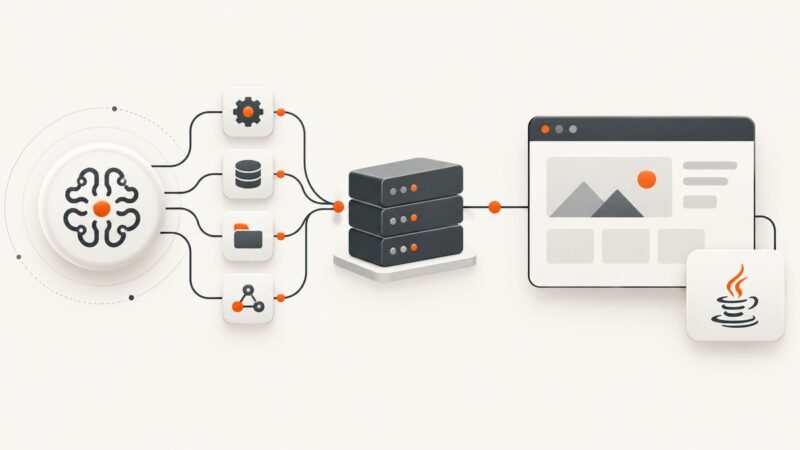
A site can also expose structured actions explicitly. Google’s Chrome documentation describes WebMCP as a proposed standard through which a site can provide tools using JavaScript and annotated HTML forms. A site might declare an operation such as searching or purchasing, so an agent can use the named action instead of inferring a button’s purpose. WebMCP is emerging and implementation-dependent; do not assume a site supports it. The documentation describes intended benefits, not a universal guarantee or independent benchmark. Chrome for Developers: WebMCP
What a web agent can and cannot do
Depending on its browser, tools, permissions, and task, an agent may be able to:
- Read and summarize page content, including content rendered after scripts execute.
- Navigate between pages and follow links.
- Enter text or interact with page controls.
- Inspect a screenshot or browser state to understand a visual layout.
- Call structured actions exposed by a participating website.
These are possible capabilities, not promises that every agent can complete every task. A site may require authentication, present content the agent cannot interpret, change its layout, or block automated access. The agent may also lack permission to perform an action or be configured to stop before it.
It helps to distinguish reading from acting. Reading a public policy is usually low consequence. Submitting a form, changing account settings, sending a message, or placing an order can affect people or data. Agent builders should make that boundary explicit in tool permissions and the user experience.
How to build a basic browser agent
There is no single standard browser-agent API: the browser automation library, model, and orchestration framework vary. A minimal implementation can still follow a clear pattern: give the agent a specific goal, expose only the needed browser actions, observe after each action, and require a human to complete consequential steps. The following pseudocode shows the control flow; it is intentionally not presented as runnable code for a particular library.
goal = "Find the public return policy on the allowed store site"
allowed_origins = ["https://shop.example"]

open_browser_session()
assert current_origin() in allowed_origins

while not task_complete:
    observation = inspect_page()  # rendered text, DOM, or screenshot
    proposed_action = agent_decides(goal, observation)

    if proposed_action.origin not in allowed_origins:
        stop("Origin is outside the allowed list")

    if proposed_action.changes_state:
        ask_user_to_confirm(proposed_action)
        if not user_confirmed:
            stop("Action was not approved")

    result = perform_permitted_action(proposed_action)
    record_minimal_audit_event(proposed_action, result)

close_browser_session()
For a real implementation, replace each placeholder with the selected browser provider’s documented API. Keep the decision layer separate from the enforcement layer: the model can propose actions, while ordinary program logic checks origins, permissions, and confirmation requirements before execution.
Start with a narrow task and permission set
- Define completion: state what result counts as done, and what the agent must not do.
- Choose an observation method: page text or DOM for structured content; screenshots when visual state matters. Browser tooling differs in what it exposes.
- Limit origins and actions: allow only the websites and operations the task needs.
- Keep credentials scoped: provide only the session or data the user authorized for this task.
- Gate consequential actions: pause for confirmation before a submit, purchase, message, or other meaningful state change.
- Handle failures explicitly: detect navigation errors, missing controls, and unexpected page states; stop safely instead of guessing indefinitely.
Security: treat pages and tool results as untrusted
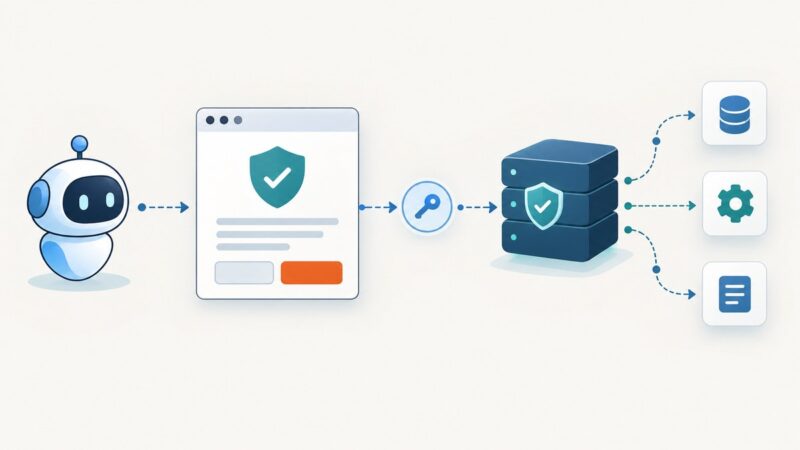
Website content can contain instructions that try to redirect an agent away from the user’s goal. Tool descriptions and returned content can also be malicious or contaminated. Google’s WebMCP security guidance notes that model-level defenses alone cannot guarantee safety because language models are probabilistic. It recommends deterministic controls, restrictions on cross-origin interactions, and user confirmation where appropriate. Chrome for Developers: WebMCP security
Data can leak through actions that appear routine. OpenAI describes URL-based data exfiltration: a malicious page may persuade an agent to load a URL containing private information, which could then appear in the destination site’s logs. Safeguards for URLs address that particular route; they do not establish that the page is trustworthy or make all browsing safe. OpenAI: Operator
Use layered controls
- Restrict destinations: enforce an origin allowlist in code and validate redirects, not just the initial URL.
- Limit tools: expose only the browser operations needed for the task; separate read-only tools from actions that change state.
- Separate instructions from page content: treat text retrieved from websites and tool responses as data to evaluate, never as authority to override the user’s request or system rules.
- Protect user data: avoid putting secrets in URLs, page text, logs, or tool outputs; pass only necessary information.
- Require confirmation: pause before high-impact actions such as purchases, submissions, or sending communications.
- Bound the run: use time, step, and retry limits, and stop when the page or requested action falls outside the defined task.
No single control makes an agent safe in every situation. The right boundaries depend on the task, the data in the session, and the consequences of an action.
Capturing a page for an agent
A screenshot can give an agent a visual observation of a page, useful when layout, rendered state, or a visual comparison matters. It is one input method; it does not itself grant permission to interact with the site or prove what content is trustworthy. If you need a screenshot in a web-agent workflow, you can capture one through a browser you control or call a screenshot API.
Or skip the browser setup
ScreenshotNeo is a website screenshot API and MCP server from Yorker Media. It accepts one GET request with a URL and returns a PNG, JPEG, WebP, or PDF. The MCP server provides take_screenshot, get_page_info, and capture_pdf tools for Claude, Cursor, and other MCP clients. See the ScreenshotNeo API documentation.
curl -G "https://api.screenshotneo.com/v1/shot" -d access_key=YOUR_API_KEY --data-urlencode url=https://stripe.com -o shot.webpPython:
import requests

r = requests.get(
    "https://api.screenshotneo.com/v1/shot",
    params={"access_key": "YOUR_API_KEY", "url": "https://stripe.com"},
    timeout=90,
)
r.raise_for_status()
open("shot.webp", "wb").write(r.content)
Node.js:
const q = new URLSearchParams({ access_key: 'YOUR_API_KEY', url: 'https://stripe.com' });
const res = await fetch(`https://api.screenshotneo.com/v1/shot?${q}`);
if (!res.ok) throw new Error(`Screenshot request failed: ${res.status}`);
await import('node:fs/promises').then(fs => fs.writeFile('shot.webp', Buffer.from(await res.arrayBuffer())));- Cookie and consent banners, newsletter popups, and chat widgets are removed before capture; each cleanup step can be turned off.
- Bot checks or CAPTCHAs, blank pages, timeouts, failed loads, and cache hits are not billed. Response headers report the page verdict and whether the request was billed.
- One thousand screenshots per month are free with no card; paid plans start at $5 for 3,000 screenshots.
Create a free ScreenshotNeo account to get 1,000 screenshots a month with no card.
Reliability, performance, and cost
Web-agent performance is not captured by a single universal success rate. A workflow depends on the site, the task, available browser capabilities, and the agent’s permissions. Dynamic rendering can require waiting for content; extra navigation and repeated observations add latency. Keep tasks bounded, wait for a meaningful page condition when possible, and avoid unbounded retries.
For reliability, check that the expected page or result appeared before acting on it. Handle timeouts, redirects, missing controls, and access challenges as explicit outcomes. When a site exposes structured actions, they may reduce the need to infer control meaning, but WebMCP support is still proposed and implementation-dependent.
Cost depends on the chosen model, browser infrastructure, and the amount of work a task performs; the research sources do not provide a comparable price or benchmark across web agents. Measure your own workflow with representative tasks, including failure cases. If the workflow only needs a page image, a screenshot API can avoid maintaining browser capture setup. ScreenshotNeo’s billed-request behavior and plan prices are described in its product documentation and pricing; verify current plan details before choosing.
Troubleshooting common web-agent failures
| Symptom | Likely cause | What to do |
|---|---|---|
| The agent cannot find a button or field | The page changed, the control is ambiguous, or content has not rendered. | Wait for the relevant state, inspect the updated page, and use a more specific locator or a site-declared tool where available. |
| The agent acts on the wrong page | A redirect or link moved it outside the intended destination. | Validate the origin after navigation and redirects; stop when it is outside the task’s allowlist. |
| A click appears to do nothing | The action may have been blocked, the page may still be loading, or the agent may have selected the wrong control. | Inspect the resulting page and browser errors, wait for a defined condition, and retry only within a fixed limit. |
| Content is missing from the observation | It may load after scripts run, require scrolling, or be unavailable to the chosen observation method. | Use a browser capability that can inspect rendered state, wait or scroll as the task permits, and confirm the content is present before proceeding. |
| The agent follows instructions found on a page | Untrusted page text was treated as an instruction. | Keep website content separate from trusted instructions; enforce permissions and destination checks outside the model. |
| Private data appears in a request URL | Untrusted content induced the agent to place data in a URL. | Do not put secrets in URLs; validate destinations and prevent sensitive values from being passed to unapproved origins. |
| A consequential action happens without approval | The action was exposed without a confirmation gate. | Require an explicit user decision before state-changing actions and enforce the gate in deterministic application logic. |
Frequently asked questions
Is a web agent the same as a browser?
No. A browser is software for accessing websites; a web agent is software acting toward a user’s goal through website content or controls. An agent may use a browser as its interface.
Does every website support WebMCP?
No. WebMCP is proposed and depends on a site choosing to implement the relevant interface.
Can I safely let an agent use my logged-in account?
Only grant the session and actions needed for a defined task. A logged-in session can expose private data and permit changes, so use narrow permissions and confirmation for consequential actions.
Does a screenshot let an agent operate a website?
A screenshot provides a visual observation. Interaction requires separate browser controls or structured website tools, with their own permissions and safeguards.
Sources and scope
This guide uses the W3C’s web user-agent draft, Chrome for Developers’ WebMCP and security documentation, and documentation from browser and agent providers. Capability descriptions reflect those sources and are not independent benchmarks. The W3C page is a Group Note draft; WebMCP is proposed. No prevalence, reliability, or safety statistic is asserted.