BlogScreenshots on your device
What Is a Screen Capture Video?
A screen capture video records activity on a display over time, with optional microphone or system audio. Learn how it differs from a screenshot.
A screen capture video is a recording of visual activity displayed on a screen over time. Depending on the tool, it can record an entire display, a selected region, an application or window, or a browser tab. It may also include microphone narration or system audio when the operating system, browser, and recording software support those sources.
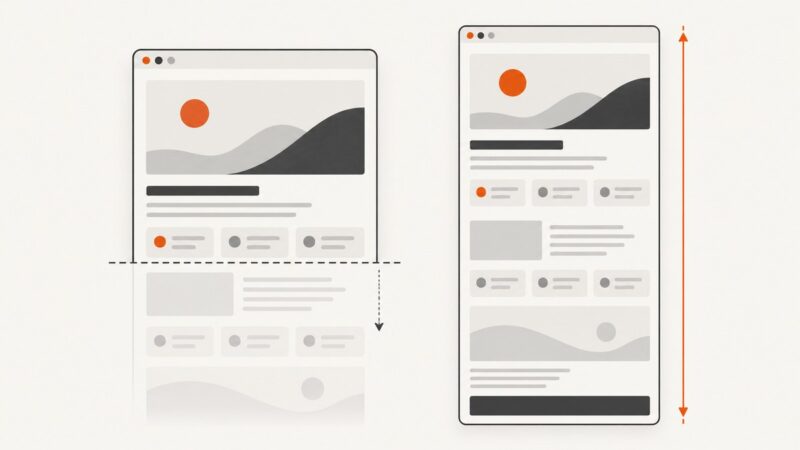
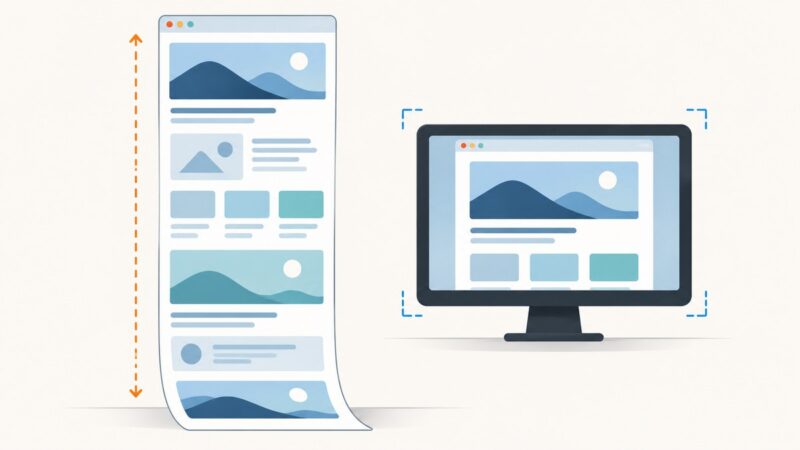
A screenshot is a single still image. A screen capture video shows changing screen content, usually so someone can explain a process, demonstrate software, document a problem, or preserve a presentation.
What can a screen capture video record?
The capture area is a choice made when recording starts. Common scopes include:
| Scope | What it includes | Useful for |
|---|---|---|
| Entire display | Everything visible on one monitor | Demonstrations that move between applications |
| Selected portion | A rectangular area of the display | Short tutorials or privacy-conscious recordings |
| Window or application | One chosen app window | Software demos without recording unrelated windows |
| Browser tab | A single tab and its displayed content | Web tutorials and browser-based support |
OBS documents separate display and window capture sources, while Chrome’s getDisplayMedia() flow lets a user choose a tab, window, or screen. The exact choices depend on the operating system, browser, application, and version.
How is a screen recording different from a screenshot?
| Characteristic | Screenshot | Screen capture video |
|---|---|---|
| Time | One instant | A sequence over time |
| Motion | Not represented | Shows cursor movement, animation, and interaction |
| Audio | None | Optional microphone and, where supported, system audio |
| Best for | Evidence, reference images, static documentation | Tutorials, bug reproduction, demonstrations, presentations |
| Editing need | Usually crop or annotate | May require trimming, narration cleanup, or privacy edits |
Use a screenshot when one state communicates the information. Use a video when the order of actions, timing, or spoken explanation matters.
Can a screen capture include audio?
Yes, when the selected recording method supports it and you grant the requested permissions. Audio can come from:
- Microphone: your narration or room sound.
- System or application audio: sounds produced by the computer or a selected application, where the platform and tool expose that option.
- No audio: a silent recording of the screen.
Audio is not automatic in every recorder. Before starting, check the selected microphone, system-audio option, and input level. Make a short test recording if the material is important.
Ways to make a screen capture video
Record on a Mac with Screenshot or QuickTime Player
Apple’s built-in workflow can record the entire screen or a selected portion and lets you choose a microphone for voice or other audio. On macOS Tahoe 26 or later, Apple’s current instructions also describe recording a selected window. Some applications may prevent their windows from being recorded. Follow Apple’s version-specific instructions in How to record the screen on Mac.
- Open the Screenshot controls or QuickTime Player’s screen-recording command.
- Choose the entire screen, a selected portion, or a supported window.
- Select a microphone if narration is needed.
- Start the recording, perform the demonstration, then stop it from the menu bar or recording controls.
- Play the result and verify the picture, cursor actions, and audio before sharing.
Record with OBS Studio
OBS provides display and window capture sources, audio-device controls, and recording settings. Its documentation covers Display Capture, Window Capture, and the Quick Start Guide.
- Create a scene.
- Add a Display Capture source for a monitor or a Window Capture source for one application.
- Configure the microphone and any available desktop or application audio source.
- Check the preview for unwanted windows, notifications, or private information.
- Start recording, perform the steps, and stop recording.
- Review the file and keep the original until the final edit is approved.
OBS source names and behavior vary by operating system and version. Test the selected source before an important recording.
Build a browser recorder with getDisplayMedia()
Web applications can request display capture through the browser’s user-facing picker. Chrome’s documentation explains that the user can select a tab, window, or screen. The browser controls the permission prompt; a page cannot silently choose a display.
<button id="start">Start recording</button>
<button id="stop" disabled>Stop and download</button>
<script>
let recorder;
let chunks = [];

const start = document.querySelector('#start');
const stop = document.querySelector('#stop');

start.onclick = async () => {
  const stream = await navigator.mediaDevices.getDisplayMedia({
    video: true,
    audio: true
  });

  chunks = [];
  recorder = new MediaRecorder(stream);
  recorder.ondataavailable = event => {
    if (event.data.size) chunks.push(event.data);
  };
  recorder.onstop = () => {
    const blob = new Blob(chunks, { type: recorder.mimeType });
    const url = URL.createObjectURL(blob);
    const link = document.createElement('a');
    link.href = url;
    link.download = 'screen-capture.webm';
    link.click();
    URL.revokeObjectURL(url);
    stream.getTracks().forEach(track => track.stop());
  };

  recorder.start();
  start.disabled = true;
  stop.disabled = false;
};

stop.onclick = () => {
  recorder.stop();
  start.disabled = false;
  stop.disabled = true;
};
</script>
Run this from a secure context such as HTTPS or localhost. The user must interact with the page and approve the picker. Audio availability depends on the selected surface and browser support, so the resulting stream may contain video only.
Use Apple’s ScreenCaptureKit for a native Mac application
For a native macOS recorder, Apple’s ScreenCaptureKit framework provides fine-grained control over displays, applications, and windows, including screen audio. Your application should request screen-recording permission from the person before capturing.
Permissions, protected windows, and privacy
- Expect a user-facing picker or operating-system permission prompt for display capture.
- Grant screen-recording permission to the application that performs the capture.
- Some applications protect their windows from recording, so a selected area can appear blank or unavailable.
- Close private tabs and notifications before recording.
- Capture only the display area and audio sources needed for the task.
- Review the final file for credentials, personal data, or other information that appeared briefly.
Quality and performance checklist
- Plan the scope: a window or region reduces unrelated content and makes the subject easier to follow.
- Test audio: confirm the microphone is the intended input and that system audio is available when required.
- Reduce load: close unnecessary applications and browser tabs so animations remain smooth.
- Keep actions deliberate: pause briefly after navigation or UI changes so viewers can follow them.
- Watch storage: longer recordings and higher-quality settings create larger files; ensure adequate free disk space.
- Check privacy: disable notifications and hide secrets before pressing record.
- Verify before sharing: play the entire file, including the beginning and end, and confirm that audio stays synchronized.
For a one-off explanation, the built-in recorder is usually the shortest path. OBS is a better fit when you need scenes, multiple sources, repeatable audio settings, or a recording workflow that you will use often. A browser implementation is useful when recording is a feature inside your own web application.
Or skip the browser setup
When you need a still image of a web page rather than a video, ScreenshotNeo provides a website screenshot API and MCP server. A single GET request returns a PNG, JPEG, WebP, or PDF. See the ScreenshotNeo API documentation for the available options.
cURL
curl -G "https://api.screenshotneo.com/v1/shot" -d access_key=YOUR_API_KEY --data-urlencode url=https://stripe.com -o shot.webpPython
import requests
r = requests.get(
    "https://api.screenshotneo.com/v1/shot",
    params={"access_key": "YOUR_API_KEY", "url": "https://stripe.com"},
    timeout=90,
)
open("shot.webp", "wb").write(r.content)
Node.js
const q = new URLSearchParams({ access_key: 'YOUR_API_KEY', url: 'https://stripe.com' });
const res = await fetch(`https://api.screenshotneo.com/v1/shot?${q}`);
ScreenshotNeo removes cookie banners, newsletter popups, and chat widgets before the shot. Bot checks, blank pages, failed loads, timeouts, and cache hits are not billed, and response headers report the page verdict and billing status. Its MCP server lets Claude, Cursor, and other MCP clients take screenshots. The Free plan includes 1,000 screenshots each month with no card; paid plans start at $5 for 3,000 shots.
Sign up free for ScreenshotNeo.
Troubleshooting
| Problem | Likely cause | Fix |
|---|---|---|
| The recording is black or blank | The wrong source was selected, permission is missing, or the application protects its window. | Recheck the selected display or window, grant screen-recording permission, and test a different source. |
| No microphone narration | The microphone was not selected, muted, or blocked by permission settings. | Select the intended input, check its level, and grant microphone access. |
| System audio is missing | The platform, browser, selected surface, or recorder does not provide that audio source. | Confirm system-audio support for the chosen method and test the exact tab, window, or display you plan to record. |
| The browser picker does not open | The call was not triggered by a user action, or the page is not in a secure context. | Start capture from a button click and serve the page over HTTPS or localhost. |
| The file stops unexpectedly | The user ended sharing, a capture track ended, or the system ran short of resources. | Keep the selected surface open, monitor available storage, and handle the stream’s ended event in application code. |
| Private information appears | Notifications, passwords, or another window entered the capture area. | Stop sharing, remove the information from the source, and edit or replace the recording before distribution. |
FAQ
Is screen recording the same as screen capture video?
Usually, yes. Both terms describe recording displayed screen activity over time. “Screen capture video” emphasizes the resulting video file.
Can I record only one application?
Yes, when your operating system or recorder supports window or application capture. OBS provides a Window Capture source, and some built-in tools provide a selected-window mode depending on version.
Does a screen capture record the mouse pointer?
That depends on the recorder and its settings. Check the preview and output rather than assuming the pointer will be included.
Can a website record my screen without asking?
Browser display capture requires a user-facing permission flow. A site cannot silently select your display through getDisplayMedia().
When should I use a screenshot instead?
Choose a screenshot when the reader needs one stable visual state. Choose a video when movement, timing, narration, or a sequence of actions carries the explanation.