What Is an AI Browser? How AI Uses the Web
An AI browser can explain a page, use context from open tabs, or take steps on websites. Learn how these features work, what they can access, and how to use them safely.
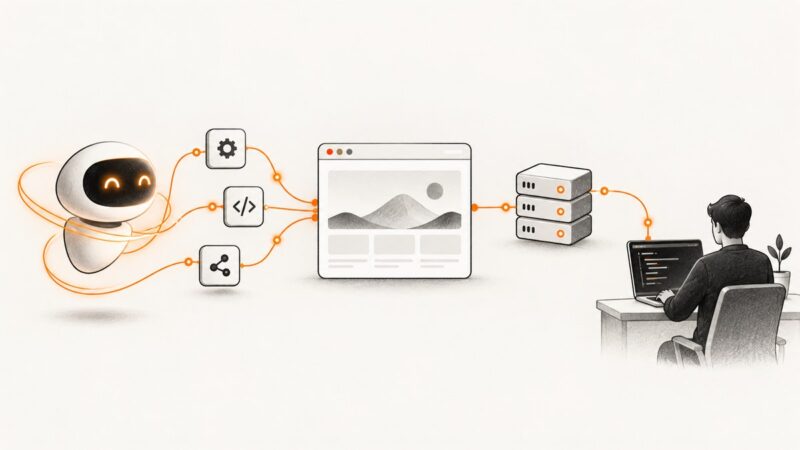
An AI browser is a browser with artificial intelligence features built into browsing. Depending on the feature, it might explain or summarize the page you are viewing, use context from open tabs, or navigate websites and carry out steps for you. The term covers different levels of autonomy: a page assistant helps you understand content; a browser agent may click, navigate, fill forms, or submit actions. A product label alone does not tell you what it can access or do.
For developers, the key questions are what context the feature can read, whether it can act on websites, what controls you have, and how you review consequential actions. Google’s documentation describes Gemini in Chrome using the current tab by default and offering multi-step auto browse to eligible users. Availability and behavior vary by product, account, region, platform, and settings. Google: Use Gemini in Chrome · Google: Ask Gemini in Chrome to complete tasks with auto browse
How does an AI browser work?
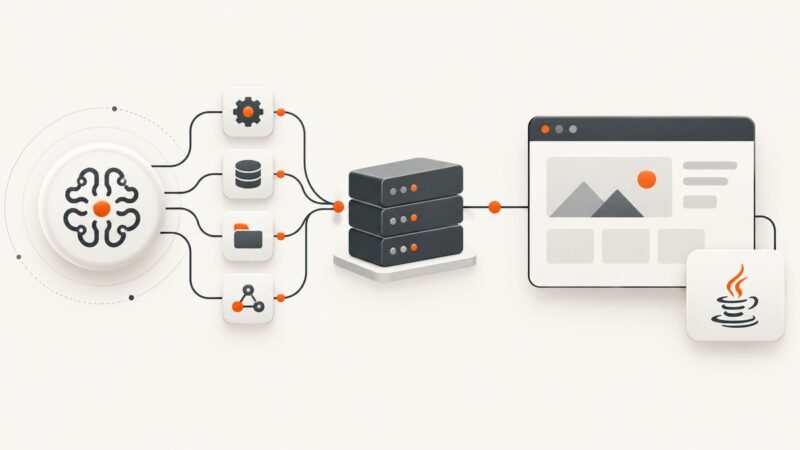
A browser assistant can provide page content or tab context to an AI feature so it can answer questions about what you are viewing. For example, you might ask it to summarize a long page or explain a passage without copying that text into a separate chat. Some features can also combine page context with broader web results or connected account information; the exact sources depend on the product and your choices.
More agentic features add an action loop. The system interprets a request, plans steps, finds or navigates to pages, and interacts with controls such as links and forms. A human may review the plan, watch the browser activity, take over a step, or approve sensitive actions. This is a description of a capability, not a promise that an agent will complete every task correctly.
- Read context: use the current page, selected tabs, or other permitted context.
- Interpret the request: decide what information or outcome the user wants.
- Answer or plan: summarize, explain, or propose website actions.
- Act, when enabled: navigate, click, or enter information, sometimes pausing for user help.
- Return a result: report what it found or did. The user should verify important outcomes.
Assistant, agent, and AI-enhanced browser: what is the difference?
These are useful behavior-based categories, not standardized industry labels. Judge a feature by its permissions and actions rather than its marketing name.
| Category | Typical behavior | Example request |
|---|---|---|
| Browser assistant | Helps interpret content the user is viewing; may answer questions or summarize. | “Summarize this page’s argument.” |
| Browser agent | May navigate a site and take multiple steps toward an outcome. | “Find three options that meet these criteria and compare them.” |
| AI-enhanced browser | Broad umbrella for a browser with an assistant, an agent, or both. | Capabilities vary; inspect the particular feature. |
Do not assume that a browser assistant can make changes on a site, or that an agent can access every tab, account, or website. Google says Gemini in Chrome’s auto browse can work across the web and may pause for a user to complete steps such as signing in or accepting cookies. Its current documentation also lists eligibility and rollout limits, so check the live requirements for your account. Google auto browse requirements and workflow
What can an AI browser see?
Context is both the mechanism that makes browser AI useful and a central privacy consideration. Depending on the feature, it may use:
- The current page or a page shared with the assistant.
- Other open tabs that you explicitly share or that the feature can access.
- Browsing history or browser-derived memory, if supported and enabled.
- Connected applications or account information, depending on the product and permissions.
- Web pages it visits while carrying out a task.
For example, Google says Gemini in Chrome uses the current tab by default and lets users share other open tabs; some features can interact with Workspace information. Auto browse may choose sites and may use personal information to complete a task. These are Google-specific descriptions, not claims about every AI browser. Google’s description of tab context · Google auto browse context and site access
Controls also differ by vendor. OpenAI’s Atlas help documentation, for instance, describes separate controls for page visibility, history, browser memories, downloads, and site permissions. Treat those as Atlas-specific controls, and verify current product status before relying on them. OpenAI Atlas browsing settings
How to evaluate an AI browser
When comparing products or deciding whether to enable a feature, work through these questions:
| Area | Questions to answer |
|---|---|
| Context | Can it read only the current page, selected tabs, browsing history, or connected applications? Is sharing explicit? |
| Agency | Does it only answer, or can it navigate, click, fill forms, and submit actions? |
| Oversight | Can you inspect a plan, pause the task, take over, or approve a consequential step? |
| Privacy | Can you control page visibility, history, memory, and site access? What information leaves the local browser? |
| Browser mode | Does it work in your local signed-in session or a separate remote browser? Which accounts and sites can it reach? |
| Availability | Is it available for your operating system, account type, region, language, and plan? Is it still supported? |
| Data portability | Can you export bookmarks, history, or other information if the product changes or is retired? |
Can an AI browser browse the web for me?
Sometimes. A page assistant can help with the site you are looking at, while an agent feature may search, navigate, and perform a sequence of actions. Google’s auto browse documentation describes multi-step tasks such as comparing products and finding travel options. It also says the user can review the plan and may need to take over when the feature pauses for a step. Feature rollout and eligibility apply. Google auto browse
Before asking an agent to act, make the goal and constraints explicit. Ask it to gather information or prepare a draft before making a purchase, changing an account, sending a message, or submitting sensitive information. Review both the proposed plan and the final state of the site.
Safety and reliability: what developers should account for
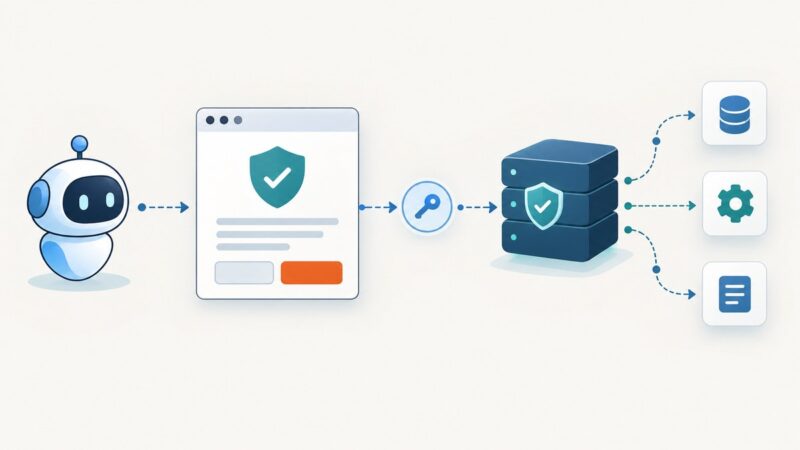
AI browser agents can misunderstand a request or a website. Website content can also contain malicious instructions that are visible to an agent even when a person would not notice them. Google warns that prompt injection can try to make an agent misuse information from pages, email, or connected apps. It also cautions that Gemini in Chrome may misunderstand a task or the site it is browsing. These are product-documented risks; they do not mean every page or task is malicious. Google’s prompt injection and auto browse guidance
- Treat page text as untrusted input, not as instructions that override the user’s request.
- Keep a human approval step for purchases, account changes, messages, and disclosure of sensitive information.
- Use the narrowest page, tab, site, and account access that completes the task.
- Ask the agent to describe intended actions before it takes them; verify the resulting page yourself.
- For developer workflows, avoid exposing secrets, production credentials, or private customer data to a feature unless its data handling is suitable for that use.
- Have a fallback for CAPTCHA, authentication, permission prompts, dynamic pages, and other steps requiring human input.
For automated collection of page visuals, a screenshot provides a fixed record of what rendered at capture time; it does not prove that the page’s content is accurate or that an AI interpretation is correct. ScreenshotNeo is a website screenshot API and MCP server from Yorker Media. It can capture a page as an image or PDF, and its MCP tools let AI agents request screenshots and page information. See ScreenshotNeo and its API documentation.
Example: capture a page for an AI workflow
A screenshot can be useful when a developer needs a visual artifact for a review, report, or agent workflow. The request below captures a public page through ScreenshotNeo. The service accepts a URL and returns an image or PDF; configure output options using the documentation. Keep API keys server-side and do not commit them to source control.
curl -G "https://api.screenshotneo.com/v1/shot" -d access_key=YOUR_API_KEY --data-urlencode url=https://stripe.com -o shot.webpimport requests
r = requests.get(
"https://api.screenshotneo.com/v1/shot",
params={"access_key": "YOUR_API_KEY", "url": "https://stripe.com"},
timeout=90,
)
r.raise_for_status()
open("shot.webp", "wb").write(r.content)const q = new URLSearchParams({ access_key: 'YOUR_API_KEY', url: 'https://stripe.com' });
const res = await fetch(`https://api.screenshotneo.com/v1/shot?${q}`);
if (!res.ok) throw new Error(`Screenshot request failed: ${res.status}`);
const bytes = new Uint8Array(await res.arrayBuffer());
await import('node:fs/promises').then(fs => fs.writeFile('shot.webp', bytes));These examples use the API’s documented GET endpoint and a public URL. Check the ScreenshotNeo docs for the available parameters and response details before adapting the request. A page behind authentication may require supported request credentials or a different capture setup; never expose credentials in a public URL or client-side code.
Or skip the browser setup
Make one GET request to capture a page. ScreenshotNeo removes cookie banners, popups, and chat widgets before the shot; those cleanup steps can be turned off. Bot checks, blank pages, failed loads, timeouts, and cache hits are never billed, and response headers indicate the page verdict and billing status. Its MCP server gives AI agents tools to take screenshots, get page information, and capture PDFs. The free plan includes 1,000 screenshots a month with no card; paid plans start at $5 for 3,000 shots. Every feature is on every plan. See the API docs.
curl -G "https://api.screenshotneo.com/v1/shot" -d access_key=YOUR_API_KEY --data-urlencode url=https://stripe.com -o shot.webpimport requests
r = requests.get("https://api.screenshotneo.com/v1/shot", params={"access_key": "YOUR_API_KEY", "url": "https://stripe.com"}, timeout=90)
open("shot.webp", "wb").write(r.content)const q = new URLSearchParams({ access_key: 'YOUR_API_KEY', url: 'https://stripe.com' });
const res = await fetch(`https://api.screenshotneo.com/v1/shot?${q}`);Create a free account for 1,000 screenshots a month, with no card required.
Performance, reliability, and cost considerations
Performance
Page assistance can avoid copying content into another tool, while agent tasks may involve multiple navigations and page interactions. The number of steps and the target sites affect how long an agent task takes. For capture workflows, full-page rendering, lazy-loaded content, and waits for selectors or network activity affect capture time; choose only the waits and capture scope your use case needs. ScreenshotNeo supports full-page capture with lazy images loaded, selector capture, wait conditions, and caching with a configurable TTL; consult its docs for parameter details.
Reliability
AI output can be wrong even when a page loads successfully. Dynamic page content, login state, consent prompts, bot checks, and human verification can interrupt automation. Make tasks resumable where possible and verify the final page state. Screenshot workflows should inspect response status and relevant headers, handle timeouts, and avoid treating a failed or blank capture as a valid artifact. ScreenshotNeo identifies page verdict and billing status in response headers.
Cost
Browser AI pricing and limits depend on the individual vendor, plan, region, and feature; check current official terms rather than assuming that browser AI is included in a particular subscription. For ScreenshotNeo, the stated monthly options are Free: 1,000 shots; Starter: $5 for 3,000; Growth: $15 for 15,000; Pro: $39 for 60,000; Scale: $99 for 250,000; and Business: $249 for 1,000,000. Yearly billing gives two months free. Every feature is available on every plan. Only clean shots are billed; bot checks or CAPTCHAs, blank pages, timeouts, failed loads, and cache hits cost nothing.
Current example: Gemini in Chrome and Atlas status
Google’s current help pages describe Gemini in Chrome as an assistant that can use page and tab context, alongside auto browse for eligible users. Requirements, rollout, and available controls can change, so check Google’s current help before planning around a particular capability. Gemini in Chrome · Auto browse
ChatGPT Atlas illustrates why lifecycle status belongs in any browser evaluation. OpenAI announced Atlas on October 21, 2025, and its current help notice says Atlas was scheduled to stop working on August 9, 2026. That scheduled date has passed; the notice provides the date but does not itself independently establish whether shutdown completed exactly as scheduled. Check OpenAI’s current support guidance for operational status and data migration. OpenAI advised users to save or export important information such as bookmarks and pages. OpenAI’s Atlas announcement · OpenAI’s Atlas status and migration guidance
Frequently asked questions
Is an AI browser the same as an AI search engine?
No. An AI browser integrates AI with browser activity or context. An AI search feature can answer questions using web search without controlling or reading your local browser tabs.
Does an AI browser always read every open tab?
No. Access depends on the product and feature. Some use the current tab by default; others let users share tabs or can operate across them. Check the controls and product documentation.
Can an AI browser submit a form or make a purchase?
Some agent features may interact with site controls. Whether they can complete a specific action depends on permissions, site behavior, and the feature. Review sensitive steps and confirm the final result yourself.
Are AI browsers safe for private work?
That depends on the feature’s data handling, access controls, and your organization’s policies. Review what page and account context is shared, which sites are permitted, and how history or memory is handled before using it with sensitive material.
Does the 2025 AI-use survey measure AI browser adoption?
No. AP-NORC reported that 60% of U.S. adults overall and 74% of adults under 30 used AI to find information at least some of the time. Those figures describe AI use for information seeking, not AI browser adoption. AP’s report of the AP-NORC poll