What Is Google MCP and How Does It Work?
Google MCP connects AI applications to Google Workspace and Cloud tools through the Model Context Protocol. Learn how servers, clients, auth and permissions fit together.
Google MCP usually means using the Model Context Protocol (MCP) to connect an AI application to Google services through MCP servers. Google documents separate remote servers for Google Workspace and Google Cloud. The AI host discovers the tools exposed by a server, authenticates as required, and calls those tools under the permissions of the connected account or project.
There is no single universal “Google MCP” product. The phrase can refer to different Workspace and Cloud integrations, each with its own tools, setup, authentication, availability and safety considerations.
What MCP means
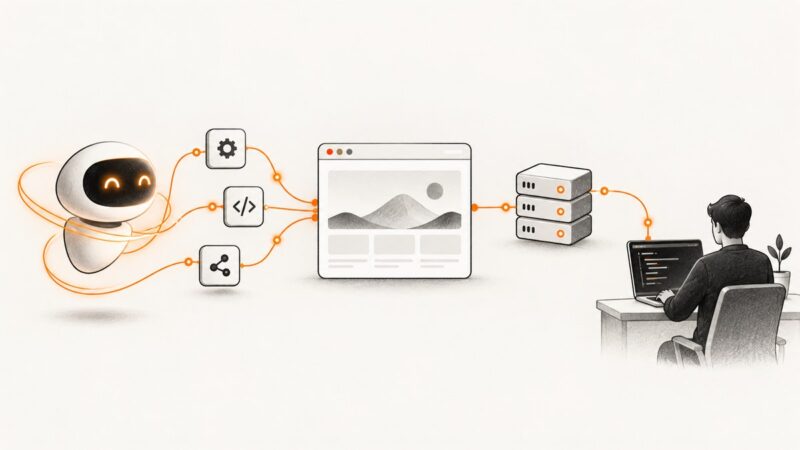
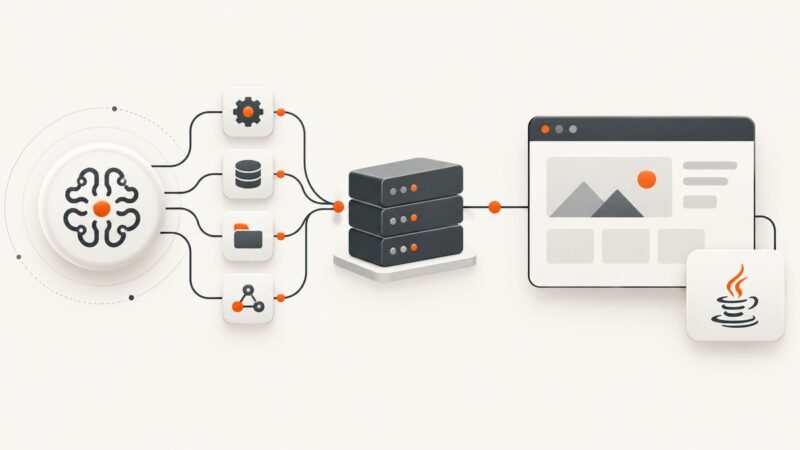
MCP is an open protocol for connecting an AI application to external tools and data sources. Google’s architecture uses three parts:
- Host: the AI application, such as a compatible CLI, IDE or custom assistant.
- Client: the MCP component inside the host that connects to a server.
- Server: a process or remote service that exposes tools and resources for a system such as Gmail, Drive or Google Cloud.
Local servers commonly communicate over standard input/output (stdio). Managed Google servers are remote services reached over HTTP. The host can discover the server’s available capabilities and invoke the appropriate tool without implementing a separate integration for every Google API.
MCP is the connection protocol. It is not a Google model, a standalone assistant or one account-wide Google integration.
Which Google services have MCP servers?
Google Workspace MCP
Google’s Workspace documentation covers product-specific remote servers for Gmail, Drive, Docs, Sheets, Slides, Calendar and Chat. Depending on the service and configuration, an AI client may search or retrieve information, draft email, upload files, read documents, create calendar events or perform other supported actions. The exact tool list is server-specific and can change while the program is in preview.
Workspace MCP is documented as part of Google’s Developer Preview Program. Workspace servers respect the user’s existing permissions and data-governance controls; connecting MCP does not grant access the account would not otherwise have.
Google Cloud MCP
Google Cloud provides remote MCP servers for compatible AI applications. Google separately documents a Google Cloud CLI remote MCP server that can execute supported gcloud and bq commands through the Cloud CLI Execution API.
The Cloud CLI remote MCP server is labeled Preview and subject to Pre-GA terms. Cloud and Workspace servers are separate integrations, so do not assume that a Workspace connection can operate Cloud resources or that a Cloud identity can read Gmail.
How a Google MCP request works
- Select a host. Use an AI client that supports MCP, such as a compatible CLI, IDE or application.
- Configure a server. Add the specific Google Workspace or Cloud MCP server required by your task, following its current setup guide.
- Connect the MCP client. The host connects to a local stdio server or to Google’s remote HTTP endpoint.
- Discover tools. The client asks what capabilities the server exposes and makes those tools available to the model.
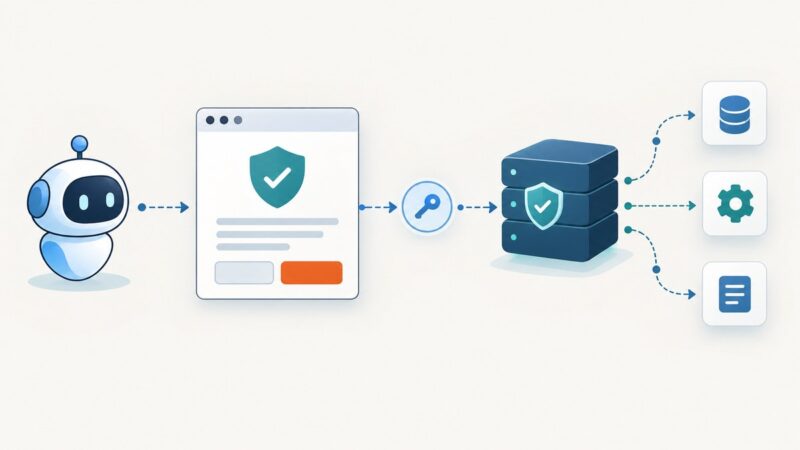
- Authenticate. The endpoint applies its supported Google or Google Cloud identity flow. Some endpoints may not require credentials; IAM-protected services require an appropriate identity.
- Check permissions. Google applies Workspace sharing rules, Cloud IAM, project policies and other governance controls.
- Review the result or action. Read operations return data to the host. Write-capable tools can create, update, send or delete data, so review proposed and completed actions.
Google’s Cloud overview currently documents MCP version 2026-07-28 with a stateless core. In that description, each request is self-describing and can be routed with headers or metadata instead of relying on the older initialize/initialized handshake and Mcp-Session-Id. Older clients and tutorials may still describe the earlier session-based flow; match the protocol behavior supported by your server and client.
Workspace setup considerations
Workspace setup is product-specific. Google’s configuration guide says that Gmail and Chat still require their standard APIs, Drive requires its standard API for some tools, Calendar does not require that API to be enabled for MCP, and the People API handles both standard access and MCP functionality. Google Chat also requires a configured Chat app in the Cloud project.
- Choose the Workspace products the agent actually needs.
- Create or select the Google Cloud project required by the server.
- Enable the standard APIs and dedicated MCP services listed in the current Workspace guide.
- Configure any required Chat app or other product-specific settings.
- Connect the server from the host’s MCP configuration.
- Sign in with the least-privileged account that can complete the task.
- Run a read-only operation first, then test a narrowly scoped write operation if needed.
Because the Workspace MCP program is in Developer Preview, check the current eligibility, terms and product list before deploying it for users.
Cloud and Cloud CLI setup considerations
For Cloud MCP, identify the exact server and the resources it must access. The Cloud CLI remote server uses the Cloud CLI Execution API and supports documented gcloud and bq command execution. Configure the required Cloud identity, project and IAM permissions, then verify which commands the server accepts.
Do not treat an API key as a substitute for IAM authentication. Google’s authentication guidance says IAM-protected MCP services require a supported identity flow. Authentication support is endpoint-specific, so follow the instructions for the exact server and client.
Authentication, permissions and data safety
Authentication is endpoint-specific
Some Google MCP endpoints may be usable without credentials, while protected Workspace and Cloud services require an identity. The client, server location and service determine whether the flow uses Google account authorization, workload identity or another supported method. Never assume that a generic API key grants IAM access.
MCP does not bypass permissions
A server can expose only what its underlying Google service permits. Drive sharing, Gmail access, Cloud IAM, organization policies and project boundaries still apply. Grant access to the smallest account, project and set of resources that meets the task.
Protect against indirect prompt injection
Google warns that an email, document or other untrusted content can contain hidden instructions that influence an AI client. Treat retrieved Workspace content as untrusted input. Connect only servers and clients you trust, avoid granting broad write access, and review actions that send messages, change files, run commands or delete data.
Workspace MCP vs Cloud MCP
| Need | Workspace MCP | Google Cloud / Cloud CLI MCP |
|---|---|---|
| Main services | Gmail, Drive, Docs, Sheets, Slides, Calendar and Chat | Google Cloud services; the CLI server documents gcloud and bq |
| Typical result | Read Workspace information or perform Workspace actions | Query or operate Cloud resources through supported commands |
| Setup | Workspace project, APIs and product-specific MCP settings; Chat needs a Chat app | Cloud identity, project permissions and Cloud CLI Execution API setup |
| Availability | Developer Preview Program | Preview and subject to Pre-GA terms |
| Main caution | Untrusted email or documents can influence the agent; writes affect account data | Verify authentication, IAM scope and every command before execution |
What developers can build
- An assistant that searches Drive and summarizes documents the user can already access.
- A meeting workflow that finds calendar availability and drafts an invitation for approval.
- A support agent that reads a Gmail thread and prepares a response without sending it automatically.
- A Cloud operations assistant that queries BigQuery with
bqor inspects resources with supportedgcloudcommands.
Keep read and write tools separate where possible. Require confirmation before sending, deleting, changing permissions or executing infrastructure commands.
Or skip the browser setup
If your workflow needs screenshots of Google documentation, Workspace pages or Cloud consoles, ScreenshotNeo provides a website screenshot API and MCP server. It accepts one GET request and returns PNG, JPEG, WebP or PDF. Cookie and consent banners, newsletter popups and chat widgets are removed before capture. Bot checks, blank pages, failed loads and cache hits are not billed, and response headers identify the page verdict and billing result.
cURL:
curl -G "https://api.screenshotneo.com/v1/shot" -d access_key=YOUR_API_KEY --data-urlencode url=https://stripe.com -o shot.webpPython:
import requests
r = requests.get("https://api.screenshotneo.com/v1/shot", params={"access_key": "YOUR_API_KEY", "url": "https://stripe.com"}, timeout=90)
open("shot.webp", "wb").write(r.content)
Node.js:
const q = new URLSearchParams({ access_key: 'YOUR_API_KEY', url: 'https://stripe.com' });
const res = await fetch(`https://api.screenshotneo.com/v1/shot?${q}`);
See the ScreenshotNeo API documentation for the full option set, including full-page and element capture, device presets, dark mode, custom CSS and JavaScript, waits, blocked resources, headers, cookies, geolocation, PDFs, caching, signed links, async jobs, bulk capture and usage reporting. Its MCP server includes take_screenshot, get_page_info and capture_pdf for Claude, Cursor and other MCP clients. The free plan includes 1,000 screenshots per month with no card; paid plans start at $5 for 3,000. Create a free ScreenshotNeo account.
Troubleshooting
The client cannot discover any Google tools
Check that the server name and endpoint match the current product guide, that the host supports the required MCP version, and that the process or HTTP connection stays alive. Preview services may change tool names or availability.
Authentication succeeds but calls return permission errors
Confirm the signed-in account, Cloud project and Workspace sharing settings. Enable the standard API required by that product, then grant only the scopes and IAM roles needed for the operation.
A Gmail, Drive or Chat tool is missing
Tool availability is product-specific. Gmail and Chat still require their standard APIs; some Drive tools do as well. Chat also requires a configured Chat app. Review the current Workspace setup guide rather than copying an older configuration.
A Cloud command is rejected
Use only commands supported by the Cloud CLI remote MCP server, verify the project and identity, and check that the Cloud CLI Execution API and required IAM permissions are configured.
The model follows instructions hidden in a document
Treat the document as untrusted content. Restrict tools, remove unnecessary write permissions, and require explicit approval before external side effects.
An older tutorial mentions initialize and Mcp-Session-Id
That tutorial may describe an earlier MCP flow. Google’s current Cloud overview documents version 2026-07-28 as stateless. Check the versions supported by both your client and server.
Performance, reliability and cost
- Latency: remote MCP adds network and service processing time; keep prompts and result sets narrow.
- Reliability: previews can change behavior or availability. Handle timeouts, unavailable tools and partial failures without assuming a write completed.
- Quota: the underlying Workspace or Cloud API quotas still apply. Batch or paginate reads where the server supports it.
- Cost: Google MCP usage is governed by the relevant Google service and account or project terms. Check current pricing and preview conditions for that service.
- Auditability: log the host, account, server, requested tool and final action, while avoiding unnecessary copies of sensitive content.
FAQ
Is Google MCP one official product?
No. It is shorthand for multiple Google MCP integrations, including separate Workspace and Cloud servers.
Can MCP read Gmail or Drive?
Workspace servers can expose Gmail and Drive tools when configured and authorized. The account’s existing permissions still apply.
Can Google MCP run Cloud commands?
The documented Cloud CLI remote MCP server supports supported gcloud and bq commands through the Cloud CLI Execution API.
Is Google MCP generally available?
Availability differs. Workspace MCP is in Developer Preview, while the Cloud CLI remote MCP server is Preview and subject to Pre-GA terms.
Does MCP replace Google APIs?
No. MCP presents tools to an AI client; the underlying Google APIs, IAM rules, quotas and governance controls still determine what can happen.
What should I verify before production use?
Verify the exact server’s availability, authentication method, API requirements, scopes, IAM roles, supported tools, quotas and confirmation policy for write actions.