BlogScreenshots on your device
What Is Lightshot? Features, Shortcuts, Platforms, and Privacy
Lightshot is a quick selected-area screenshot tool for Windows, Mac, and browsers, with editing, clipboard copy, saving, uploads, and sharing.
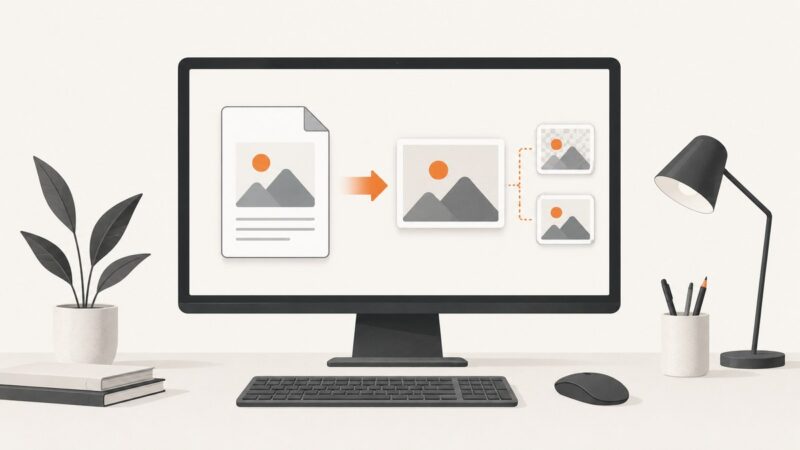
Lightshot is screenshot software for capturing a selected area of your screen. After selecting a region, you can annotate it, copy it to the clipboard, save it as an image, upload it to get a shareable link, or search for visually similar images. Lightshot is available as Windows and Mac software plus browser add-ons for Chrome, Firefox, Internet Explorer, and Opera. The publisher does not provide a native Linux application; Wine is mentioned as a workaround.
This guide explains what Lightshot does, how its workflow works, which shortcuts and formats it supports, where its privacy limits matter, and when a developer may need a website screenshot API instead.
What is Lightshot used for?
Lightshot is designed for fast, temporary screen captures. It is useful when you need to:
- Capture one region of a screen instead of the entire desktop.
- Add arrows, lines, boxes, highlights, or text before sharing.
- Copy the result directly into a chat, issue tracker, document, or image editor.
- Save a local PNG, BMP, or JPG file.
- Upload an image and receive a short link.
- Open an online editor or search for visually similar images.
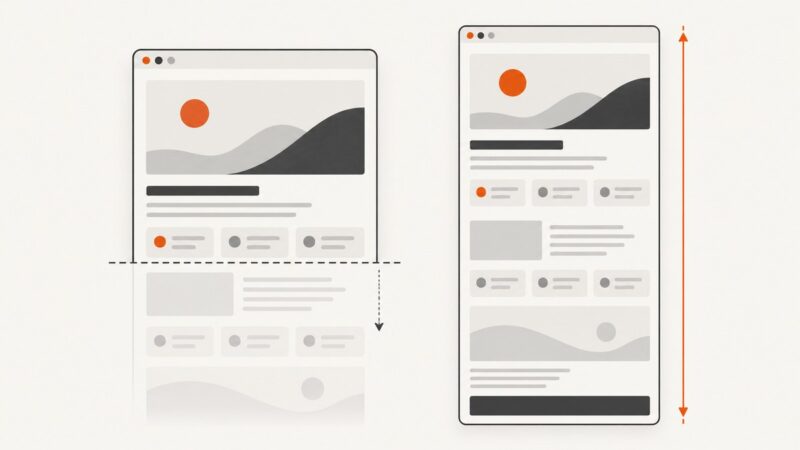
Lightshot is a desktop and browser capture utility. It does not replace a browser automation system when you need repeatable screenshots of URLs, full-page rendering, device emulation, scheduled jobs, or an API pipeline.
How Lightshot works
- Start a capture with the Lightshot shortcut.
- Drag over the portion of the screen you want to capture.
- Use the editing controls if you need annotations.
- Choose an output action: copy, save, edit online, upload, or cancel.
The selection model is the core of Lightshot: you draw a rectangle around the content you want. The capture can then be edited during the selection workflow or later in the online editor.
Windows shortcuts
| Action | Windows shortcut |
|---|---|
| Start a capture | PrntScr |
| Copy the selected screenshot | Ctrl+C |
| Save the screenshot | Ctrl+S |
| Open the online editor | Ctrl+E |
| Upload the screenshot | Ctrl+D |
Lightshot’s shortcut guide documents corresponding Command-based combinations on Mac. The Mac download page lists Shift-Command-9 as the capture shortcut; the exact behavior can depend on the installed version or configuration.
Platforms and installation
| Platform | Availability described by Lightshot |
|---|---|
| Windows | Desktop application |
| macOS | Desktop application |
| Chrome | Browser add-on |
| Firefox | Browser version |
| Internet Explorer | Browser version |
| Opera | Browser version |
| Linux | No application designed specifically for Linux; Wine may be tried as a workaround |
Install the desktop application or browser add-on from Lightshot’s official download pages. After installation, the capture shortcut normally starts the selection overlay over the current desktop or browser content.
Editing and sharing options
Annotations
During capture, Lightshot provides basic editing controls so you can point out a defect, explain a UI state, or mark a region before sending it. The official feature description also mentions editing later in an online editor.
Clipboard copy
On Windows, press Ctrl+C after selecting the region. You can then paste the image into an application that accepts bitmap clipboard data.
Local saving
Use Ctrl+S on Windows to save the image. Lightshot lists PNG, BMP, and JPG as supported formats. Choose a local file when the image contains information that should not leave your computer.
Uploading and links
The upload action sends the image to Lightshot’s image-sharing service and returns a link. The service can also open an online editor and search for visually similar images.
Lightshot says an account is needed to find all screenshots in a gallery. An account does not make an uploaded image private.
Lightshot privacy: what you should not upload
Lightshot’s privacy policy says uploaded images are public to anyone who knows the exact image URL and describes the website as intended for image sharing rather than secure storage. Treat every uploaded screenshot as shareable.
Do not upload screenshots containing:
- API keys, passwords, session cookies, access tokens, or recovery codes.
- Private customer records, invoices, health information, or personal addresses.
- Unreleased product screens or confidential source code.
- Internal dashboards whose URLs or data should remain restricted.
If private information was uploaded accidentally, the official FAQ points to contacting support or using the site’s abuse button to request removal. That is a removal-request path, not a guarantee of immediate deletion.
Lightshot versus Windows Snipping Tool
Windows includes Snipping Tool for basic screen capture. Lightshot is a reasonable choice when you want its selected-area workflow, annotation controls, upload shortcut, or similar-image search. Snipping Tool may be preferable when you want to keep captures within Windows’ built-in tools.
| Question | Lightshot | What to verify for another tool |
|---|---|---|
| What can I capture? | A selected screen region | Region, window, full screen, scrolling page, or element capture |
| Can I annotate? | Yes, during capture or in the online editor | Available shapes, text, blur, and export controls |
| How is it shared? | Clipboard, local file, or uploaded link | Local-only, public URL, or access-controlled sharing |
| Where is it stored? | Locally when saved; uploaded images are publicly reachable by URL | Retention, account requirements, and privacy policy |
When Lightshot is the wrong tool
Use a browser automation tool or screenshot API when the input is a URL rather than your current screen. Typical requirements include:
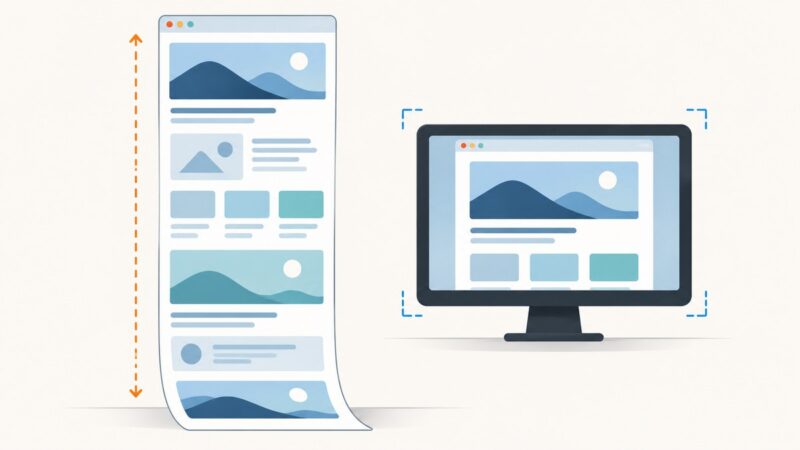
- Capturing a full page with content loaded as the page scrolls.
- Taking the same screenshot repeatedly in CI, documentation builds, or monitoring.
- Choosing a viewport, device preset, pixel ratio, timezone, or geolocation.
- Waiting for a selector, a delay, or network idle before capture.
- Applying custom CSS or JavaScript, hiding selectors, blocking requests, or setting cookies and headers.
- Returning PNG, JPEG, WebP, or PDF data directly to an application.
Or skip the browser setup
ScreenshotNeo is a website screenshot API and MCP server. Send one GET request with a URL and receive a PNG, JPEG, WebP, or PDF. Before capture, it accepts cookie and consent banners and removes more than 60 known consent platforms, newsletter popups, and chat widgets; each cleanup step can be turned off. Bot checks, CAPTCHAs, blank pages, timeouts, failed loads, and cache hits are not billed, and the response identifies the result with X-Page-Verdict and X-Billed headers.
See the ScreenshotNeo API documentation for all options. The following examples are runnable after replacing YOUR_API_KEY.
cURL
curl -G "https://api.screenshotneo.com/v1/shot" \
  -d access_key=YOUR_API_KEY \
  --data-urlencode url=https://stripe.com \
  -o shot.webp
Python
import requests

r = requests.get(
    "https://api.screenshotneo.com/v1/shot",
    params={"access_key": "YOUR_API_KEY", "url": "https://stripe.com"},
    timeout=90,
)
r.raise_for_status()
open("shot.webp", "wb").write(r.content)
Node.js
const q = new URLSearchParams({
  access_key: 'YOUR_API_KEY',
  url: 'https://stripe.com'
});
const res = await fetch(`https://api.screenshotneo.com/v1/shot?${q}`);
if (!res.ok) throw new Error(`HTTP ${res.status}`);
const body = Buffer.from(await res.arrayBuffer());
require('fs').writeFileSync('shot.webp', body);
Useful ScreenshotNeo capabilities
- Full-page capture with lazy images loaded, or one element selected by CSS selector.
- Dark mode, 12 device presets, arbitrary viewports, and retina scale.
- PDF paper size, margins, landscape mode, and page ranges.
- Custom CSS and JavaScript, click-before-capture actions, hide selectors, and wait conditions.
- Ad, tracker, request, and resource-type blocking.
- Custom headers, cookies, user agent, Authorization, timezone, and geolocation.
- Transparent backgrounds, image resizing, configurable cache TTL, signed links, asynchronous jobs with signed webhooks, bulk capture for 100 URLs per call, a usage API, and an OpenAPI specification.
- Parameter names used by other screenshot APIs also work, which simplifies migration.
The MCP server exposes take_screenshot, get_page_info, and capture_pdf for Claude, Cursor, and other MCP clients.
Cost and reliability notes
The Free plan includes 1,000 shots per month with no card. Paid plans start at $5 for 3,000 shots; higher plans are Growth ($15 for 15,000), Pro ($39 for 60,000), Scale ($99 for 250,000), and Business ($249 for 1,000,000). Yearly billing gives two months free, and every feature is available on every plan. Only clean shots are billed, so failed loads and the other non-capture verdicts listed above do not consume paid shots.
For production jobs, use a timeout appropriate to the page, inspect the verdict and billing headers, cache stable pages with a TTL, and use asynchronous jobs with signed webhooks for long or high-volume workflows.
Create a free ScreenshotNeo account to get 1,000 screenshots each month with no card.
Troubleshooting Lightshot
| Problem | Likely cause | Fix |
|---|---|---|
| The shortcut does nothing | Another application owns the Print Screen key, or Lightshot is not running | Start Lightshot, review its shortcut settings, and close software that intercepts the key. |
| The wrong area is captured | The selection was started on the wrong monitor or window | Cancel and restart the capture with the target content visible. |
| Clipboard paste is empty | The selection was canceled or copied before completion | Finish the selection, then press Ctrl+C and paste into an image-capable app. |
| The upload link exposes sensitive data | Uploaded images are publicly reachable by exact URL | Do not upload secrets; save locally instead. For an accidental upload, use support or the abuse button to request removal. |
| Linux installation fails | There is no native Linux application listed | Use a native Linux capture tool or try the Wine workaround mentioned by Lightshot. |
| Images look different after saving | The selected output format or editor changed the file | Choose PNG for lossless UI detail, or JPG when a smaller photographic file is acceptable. |
FAQ
Is Lightshot free?
The reviewed official pages describe Lightshot downloads and features but do not establish a separate paid tier. Check the current official download and terms pages for present availability.
Can Lightshot capture a full web page?
Lightshot’s documented workflow is a selected area of the visible screen. A browser automation tool or website screenshot API is better for full-page capture.
Can I use Lightshot without an account?
You can capture and save locally without relying on a gallery account. The FAQ says an account is needed to find all screenshots in a prntscr.com gallery.
Are Lightshot uploads private?
No. The privacy policy says anyone who knows an uploaded image’s exact URL can view it.
Which format should I choose?
Lightshot lists PNG, BMP, and JPG. PNG is usually suitable for interface screenshots and text; JPG can be useful when a smaller file matters.
Does Lightshot run natively on Linux?
The official download information says there is no application designed specifically for Linux. Wine is mentioned as a workaround to try.
Summary
Lightshot is a fast selected-area screenshot utility with annotations, clipboard copying, local saving, uploads, and visual search. Its main limitation for sensitive work is that uploaded images are public by URL. For automated website captures, configurable rendering, PDFs, or AI-agent workflows, ScreenshotNeo provides a URL-based API and MCP server with cleanup before capture and billing that excludes failed and non-clean results.