What Is Visual Regression Testing? A Practical Guide
Learn how visual regression testing uses screenshot baselines to catch UI changes, stabilize Playwright tests, and choose a review workflow.

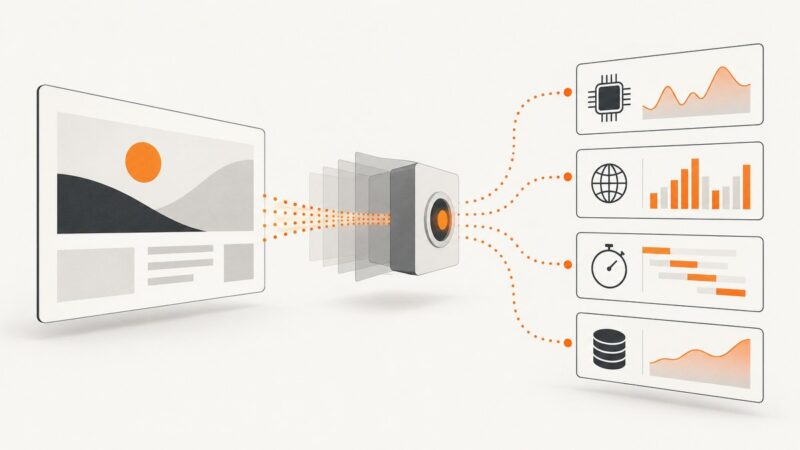
Visual regression testing captures a rendered page or component, compares it with an approved baseline image, and sends visual differences to review. It catches layout, color, typography, spacing, and visibility changes that functional assertions can miss. A difference is evidence to investigate, not an automatic bug: intentional redesigns, dynamic data, animation, browser updates, and unstable state also change pixels.
This guide explains a reliable workflow with Playwright, how to choose capture scope and thresholds, how hosted review fits, and how to use ScreenshotNeo when you need clean screenshots from many URLs or from an AI agent.
What visual regression testing checks
A visual test has three artifacts:
- State: a deterministic route, viewport, device, data set, and user interaction.
- Capture: a screenshot of the page or a selected element after it has settled.
- Baseline and diff: an approved reference image and a comparison result showing changed pixels.
On the first run, the captured image becomes the reference. Later runs compare new output with that reference. Updating a baseline is therefore a reviewed product change: once accepted, the new pixels define “expected” for future runs.
Visual checks complement functional and accessibility tests. A button can still be present and clickable while being covered by a modal, clipped on mobile, or rendered with unreadable contrast. Conversely, a pixel diff cannot tell you whether a form submits or whether a heading is announced correctly.
How the workflow works
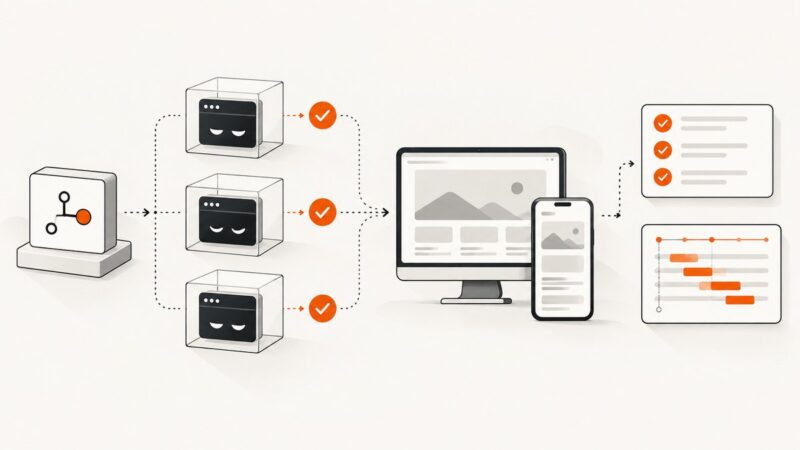
- Select important states. Include critical routes, breakpoints, components, and states reached after meaningful actions such as opening a menu or submitting invalid data.
- Make rendering reproducible. Fix test data, locale, timezone, fonts, viewport, browser version, and network responses. Freeze or hide clocks, ads, avatars, and other volatile content.
- Create the baseline. Run the test in the chosen environment and review the initial image before committing it.
- Compare every change. CI captures the same state and reports a diff against the approved image.
- Review the diff. Accept an intentional design change; investigate or fix an unexpected one; rerun if the page was unstable.
- Update deliberately. Change snapshots only after code review. In Playwright,
npx playwright test --update-snapshotsregenerates expected images.

Playwright: a complete baseline test
Playwright Test provides expect(page).toHaveScreenshot(). It waits for two consecutive screenshots to match before comparing, which helps with late layout shifts. The first execution creates a reference; subsequent runs compare against it.
import { test, expect } from '@playwright/test';

test('dashboard visual contract', async ({ page }) => {
  await page.goto('http://localhost:3000/dashboard', { waitUntil: 'networkidle' });
  await page.setViewportSize({ width: 1440, height: 900 });
  await page.evaluate(() => document.fonts.ready);
  await page.addStyleTag({ content: `*, *::before, *::after { animation-duration: 0s !important; transition: none !important; caret-color: transparent !important; } [data-testid='live-clock'], [data-testid='rotating-ad'] { visibility: hidden !important; }` });
  await expect(page).toHaveScreenshot('dashboard.png', { fullPage: true, animations: 'disabled', caret: 'hide', maxDiffPixels: 80, threshold: 0.2 });
  await expect(page.getByTestId('revenue-card')).toHaveScreenshot('revenue-card.png', { animations: 'disabled', maxDiffPixels: 20 });
});
Commit snapshots to version control and configure projects:
import { defineConfig, devices } from '@playwright/test';
export default defineConfig({
  testDir: './tests',
  snapshotPathTemplate: '{testDir}/__snapshots__/{projectName}/{arg}{ext}',
  expect: { toHaveScreenshot: { animations: 'disabled', scale: 'css' } },
  projects: [
    { name: 'chromium', use: { ...devices['Desktop Chrome'] } },
    { name: 'mobile', use: { ...devices['iPhone 13'] } }
  ]
});
Run npx playwright test. To approve an intentional update, inspect the diff, run npx playwright test --update-snapshots, and commit the changed files with the feature change.
Options that control signal and noise
| Option or practice | Use it when | Risk |
|---|---|---|
fullPage |
Checking document length and page-level layout | More dynamic content and review work |
| locator.screenshot | A component has a clear visual contract | Misses defects outside the element |
animations: 'disabled' |
Motion causes frame changes | Does not test animation itself |
stylePath or CSS |
Hiding cursors, timestamps, ads, and rotating content | Broad selectors can conceal defects |
maxDiffPixels |
Allowing known rasterization variance | Loose limits mask changes |
threshold |
Changing color sensitivity deliberately | Higher tolerance reduces sensitivity |
| Separate projects | Browsers, themes, or breakpoints differ | Each needs a baseline |
Playwright warns that host OS, browser version, settings, hardware, power source, and headless mode can alter rendering. Generate and consume baselines in the same pinned CI image, with identical fonts and browser channel.
Choosing capture scope
Start with component or locator captures for fast, understandable failures. Add full-page tests for navigation shells, responsive breakpoints, and pages where vertical flow matters. Test representative empty, populated, validation-error, dark-mode, and mobile states rather than every route. Separate browser baselines when rasterization differs.
Hosted review versus repository snapshots
Repository snapshots suit teams already using Playwright Test: images live beside code and pull requests show changed files. A hosted workflow such as Chromatic for Playwright uploads page archives, stores snapshots in the cloud, indexes them with Git commits, and provides approval or rejection interfaces. Evaluate baseline storage, collaboration, environment control, CI integration, scale, retention, and current pricing directly with each vendor. Hosted snapshots do not replace accessibility or functional tests.
Or skip the browser setup
For URL-level captures, ScreenshotNeo provides a GET endpoint returning PNG, JPEG, WebP, or PDF. It accepts consent banners like a visitor and removes 60+ known consent platforms, newsletter popups, and chat widgets before capture. Bot checks, CAPTCHAs, blank pages, timeouts, failed loads, and cache hits are not billed; response headers identify the page verdict and billing result.
See the ScreenshotNeo API docs. Minimal calls:
curl -G "https://api.screenshotneo.com/v1/shot" -d access_key=YOUR_API_KEY --data-urlencode url=https://stripe.com -o shot.webpimport requests
r = requests.get("https://api.screenshotneo.com/v1/shot", params={"access_key": "YOUR_API_KEY", "url": "https://stripe.com"}, timeout=90)
r.raise_for_status()
open("shot.webp", "wb").write(r.content)const q = new URLSearchParams({ access_key: 'YOUR_API_KEY', url: 'https://stripe.com' });
const res = await fetch(`https://api.screenshotneo.com/v1/shot?${q}`);
if (!res.ok) throw new Error(`HTTP ${res.status}`);
require('fs').writeFileSync('shot.webp', Buffer.from(await res.arrayBuffer()));Options include full-page capture with lazy images loaded, CSS-selector element capture, dark mode, 12 device presets or any viewport, retina scale, PDF paper size/margins/landscape/page ranges, HTML/CSS to image, custom CSS and JavaScript, pre-capture clicks, hidden selectors, waits for a selector/delay/network idle, blocked ads/trackers/requests/resource types, custom headers/cookies/user agent/Authorization, timezone and geolocation, transparent backgrounds, resizing, a chosen cache TTL, signed public image links, asynchronous jobs with signed webhooks, bulk capture of 100 URLs per call, a usage API, and an OpenAPI specification. Parameter names used by other screenshot APIs also work, easing migration.
ScreenshotNeo also supplies an MCP server with take_screenshot, get_page_info, and capture_pdf for Claude, Cursor, and other MCP clients. Plans include 1,000 shots/month free without a card; paid plans start at $5 for 3,000 shots. Higher plans are $15/15,000, $39/60,000, $99/250,000, and $249/1,000,000; yearly billing gives two months free, and every feature is on every plan. Create a free ScreenshotNeo account.
Edge cases to plan for
- Late images: wait for a selector or network idle; load lazy images.
- Overlays: dismiss consistently or remove in a controlled layer.
- Motion: disable animation and choose a deterministic carousel slide.
- Personalization: seed accounts, cookies, and API fixtures; keep secrets out of snapshots.
- Canvas/video: freeze the frame or replace with a fixture.
- Long pages: pair a full-page smoke image with section captures.
- Fonts: await
document.fonts.readyand pin files. - Theme: make dark mode and reduced motion explicit projects.

Troubleshooting common failures
| Symptom | Cause | Fix |
|---|---|---|
| Diff every run | Animation, clock, random data, network race | Disable motion, freeze time, seed data, wait for a stable selector, mock volatile requests |
| Everything shifts | OS, browser, zoom, scale, or font differs | Pin CI image/browser and fonts; use the same viewport |
| No comparison on first run | No baseline | Review and commit the generated reference |
| Defect hidden | Threshold or mask too broad | Lower tolerance and narrow selectors |
| Blank image | Navigation blocked or too early | Check status, wait for a meaningful selector, preserve failure artifacts |
| Full page clipped | Fixed container or scrolling behavior | Capture container and page separately; adjust test-only overflow |
| Hosted upload fails | Token, network policy, or runner issue | Check credentials/outbound access and current integration docs |
Performance, reliability, and cost
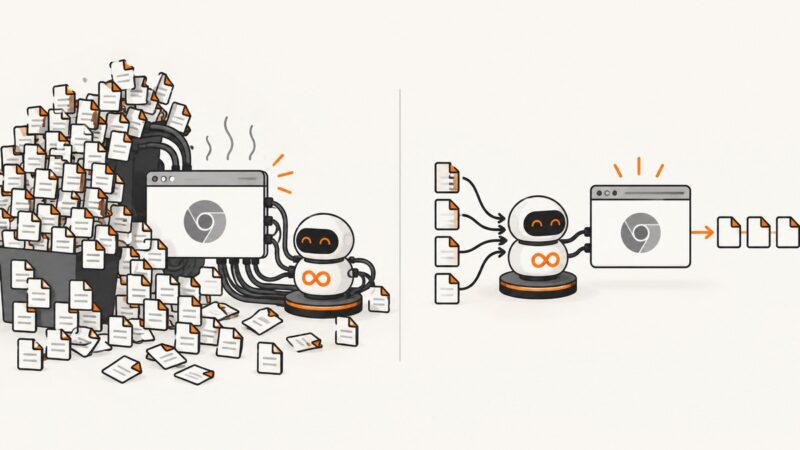
Visual tests render and encode images, so keep a small smoke set on pull requests and run broad browser and route coverage on scheduled or release workflows. Locator captures reduce image size and review area. Reuse authenticated setup but reset state between tests. Parallelize only when CPU and memory allow it; oversubscription makes timing unstable.
Pin browsers and cache immutable assets. Treat a timeout as a capture failure. Preserve screenshots, traces, console output, and network logs so reviewers can separate an application regression from an environment incident. Check hosted services’ retention rules before sending private pages.
Cost combines CI minutes, storage, reviewer time, and hosted capture volume. Select meaningful states and review baseline updates like code. ScreenshotNeo bills only clean shots; bot checks, blank pages, timeouts, failed loads, and cache hits are free, with X-Page-Verdict and X-Billed headers explaining each response.
FAQ
Is a visual diff proof of a bug?
No. It identifies changed rendering; review intent and stability.
Should I test every page?
Cover critical journeys and representative templates first.
Can it replace end-to-end tests?
No. Pair it with functional, accessibility, and manual checks.
When should a baseline change?
After the design or rendering change is understood and reviewed.
How do I capture a private page?
Inject test credentials securely; configure headers, cookies, or Authorization where supported and review retention.
What is the smallest useful suite?
One stable desktop and mobile state per critical template, plus high-risk components and error states.