Why Quality Engineering Matters for AI
AI can generate software quickly, but speed does not prove it works safely or reliably. Learn how to build evidence that an AI system is ready for use.
AI can help teams produce code, tests, and answers faster. That speed does not show whether a system reliably meets its intended purpose. Quality engineering matters for AI because teams must define acceptable behavior, gather evidence across variable runs and system dependencies, and make an accountable release decision.
A useful test strategy starts with two questions: What are we protecting? And what evidence do we need before release? The answers depend on the feature’s users, consequences of failure, and operating context. A customer support assistant, an internal search tool, and a system that can take actions need different risk controls and release criteria.
1. Quality engineering asks whether the whole system works
A model can produce a plausible answer while the deployed feature still fails. The failure may come from missing or stale data, retrieval, prompt construction, authorization, tool calls, post-processing, or the surrounding workflow. Evaluating a model’s answer in isolation will not reveal every failure in that chain.
Define the system boundary before choosing tests. Include the components that can change the user-visible outcome: inputs, data ingestion, retrieval, model and prompt versions, tools, permissions, output handling, and recovery paths. For each component, ask what happens when it is unavailable, incorrect, slow, or given unexpected input.
2. Start with risks and intended behavior
Write down the feature’s intended behavior and unacceptable outcomes. Make these statements specific enough to evaluate. “Be helpful” is difficult to test; “answer questions from the approved knowledge base, cite relevant material, and abstain when support is missing” gives the team observable behaviors to inspect.
Prioritize scenarios by both likelihood and consequence. A rare disclosure of restricted information may deserve more attention than a frequent formatting defect. Record the reasoning so reviewers know why a test exists and what a failure means.
| Decision | Questions to answer |
|---|---|
| Purpose | Who uses the feature, and what task should it help them complete? |
| Risk | What could go wrong, who could be affected, and how severe would the harm be? |
| Scope | Which data sources, models, tools, interfaces, and workflows are included? |
| Evidence | Which scenarios, metrics, traces, and human reviews are needed? |
| Release | What failures block release, who accepts residual risk, and how can the change be rolled back? |
3. Build scenarios around actual user behavior
Happy-path prompts are only a starting point. People paraphrase, omit details, ask ambiguous questions, change their minds in follow-ups, and provide incomplete or contradictory information. They may also request exceptions or attempt to access restricted information.
Create a scenario set that represents those behaviors and the contexts in which the feature will run. Include normal tasks, edge cases, authorization boundaries, unavailable dependencies, and recovery situations. Keep scenarios tied to a risk or requirement so the suite remains useful as the product changes.
- Use paraphrases and different levels of specificity for important requests.
- Test follow-up questions that depend on earlier conversation context.
- Test missing, malformed, stale, or conflicting source information.
- Check that users cannot retrieve information outside their permissions.
- Test safe abstention when evidence is insufficient and recovery when a tool fails.
- Turn production incidents and user-reported failures into regression scenarios, after removing sensitive data as appropriate.
4. Repeat evaluations when outputs can vary
A single successful run is weak evidence for a system whose behavior can vary. Results may change with model versions, prompts, sampling, context, retrieved documents, tool responses, or other runtime conditions. Repeat important scenarios and inspect the spread of outcomes, not just one favorable example.
For each repeated evaluation, preserve enough context to interpret it: scenario and input, relevant model and prompt versions, retrieved material, tool calls, output, and evaluation result. Compare outcome distributions and review severe failures individually. An average score can conceal a small number of high-impact errors.
Set evaluation depth according to risk and cost. High-consequence scenarios may merit more repetitions and careful human review; lower-risk checks may need less. Define in advance what counts as acceptable variation, which failures are release blockers, and who reviews cases that automated scoring cannot judge reliably.
5. Measure more than accuracy
Choose measures based on the task and failure modes. Accuracy may help for a task with a clear expected answer, but it does not by itself show that an answer is grounded, relevant, permission-safe, policy-compliant, or useful in the workflow.
| Measure or review area | What it helps reveal |
|---|---|
| Correctness and relevance | Whether the response addresses the request and gets important facts right. |
| Groundedness | Whether claims are supported by available source material. |
| Access control | Whether the system respects user permissions across retrieval and tool use. |
| Policy compliance and safe abstention | Whether it follows intended boundaries and declines when it should. |
| Tool success and recovery | Whether actions complete correctly and failures leave the user in a safe, understandable state. |
| Latency | Whether response time is suitable for the actual workflow. |
Use automated metrics where they are meaningful, and inspect examples and traces for context. A score is evidence about a defined measure and dataset; it is not a universal quality verdict.
6. Evaluate the workflow and inspect failures
Follow a request through the system: input handling, retrieval, model response, authorization, tool execution, post-processing, and the final user-visible result. Inspect traces when a scenario fails so the team can locate the failing component rather than treating every issue as a model problem.
Review failures by severity and type. A useful failure record includes the scenario, expected and observed behavior, impact, relevant trace, suspected cause, owner, and regression test. Feed resolved failures back into evaluation so fixes remain covered.
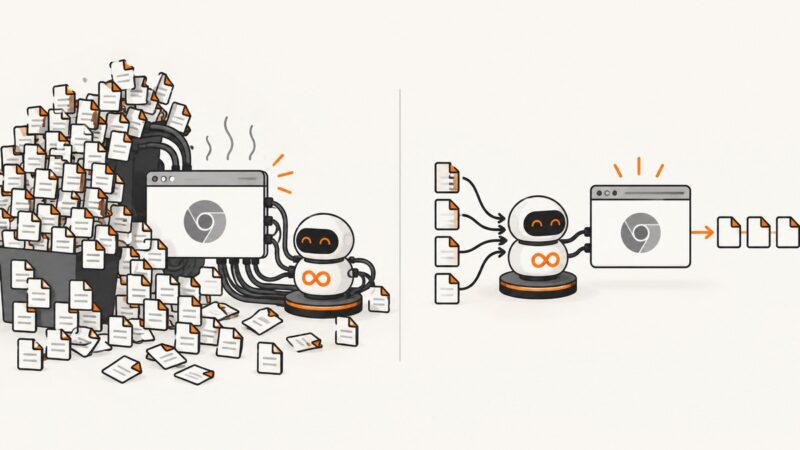
Where a feature is exposed through a web page, browser checks can provide evidence about the rendered workflow as well as the response logic. ScreenshotNeo is a website screenshot API and MCP server from ScreenshotNeo; it can capture pages for visual inspection, including pages used in AI-assisted workflows. A screenshot is one artifact in an evaluation, not proof that the underlying answer, permissions, or action was correct.
7. Make the test strategy and release decision explicit
A test strategy records decisions about risk, scope, environments, test data, automation, metrics, and release criteria. For AI-assisted development, it should also say how generated code and generated tests are reviewed, who owns sign-off, and what evidence is required before deployment.
- Define the intended behavior and risks. Name users, important tasks, unacceptable outcomes, and the components in scope.
- Choose representative scenarios. Cover normal use, variation, boundaries, misuse, dependencies, and recovery.
- Specify evidence. Select measures, repeated-run depth, trace review, and human evaluation based on risk.
- Set release criteria. State blocking failures, accepted residual risk, approvers, and rollback conditions before reviewing results.
- Keep the suite current. Add production failures and meaningful changes to regression evaluation.
Standards and governance frameworks may also be relevant to a team’s context. Assess applicable materials directly rather than treating a mention of a framework as evidence that a system complies.
8. Capture browser evidence when the interface is part of the system
For a web-based AI feature, a screenshot can help reviewers see whether the page rendered, whether the expected content appeared, and whether a visual regression occurred. It cannot establish that an answer is grounded, a user is authorized, or a tool action succeeded. Combine visual artifacts with application-level outcomes and traces.
ScreenshotNeo supports PNG, JPEG, WebP, and PDF captures. Its API accepts one GET request with a URL; options include full-page and element capture, device and viewport settings, dark mode, custom CSS or JavaScript, waits, headers and cookies, and request blocking. See the ScreenshotNeo API documentation for the request parameters.
DIY browser capture with Playwright
This runnable Node.js example captures a web page to a PNG file. Install Playwright and its Chromium browser first:
npm install playwright
npx playwright install chromium
Save as capture.mjs and run with node capture.mjs:
import { chromium } from 'playwright';

const url = process.argv[2] ?? 'https://example.com';
const browser = await chromium.launch({ headless: true });
try {
  const page = await browser.newPage({ viewport: { width: 1440, height: 1000 } });
  const response = await page.goto(url, { waitUntil: 'networkidle', timeout: 45_000 });
  if (!response || !response.ok()) {
    throw new Error(`Navigation failed: ${response?.status() ?? 'no response'}`);
  }
  await page.screenshot({ path: 'page.png', fullPage: true });
} finally {
  await browser.close();
}
Run it against a target with node capture.mjs https://example.com. For sites that keep long-lived network connections open, networkidle may never occur; wait for a meaningful selector or use domcontentloaded followed by an explicit wait instead. Avoid capturing authenticated or sensitive pages into publicly accessible artifacts.
Or skip the browser setup
Use the ScreenshotNeo API for a one-call capture. Replace the target URL and API key with your own values. Full examples and options are in the API docs.
curl -G "https://api.screenshotneo.com/v1/shot" -d access_key=YOUR_API_KEY --data-urlencode url=https://stripe.com -o shot.webpimport requests
r = requests.get("https://api.screenshotneo.com/v1/shot", params={"access_key": "YOUR_API_KEY", "url": "https://stripe.com"}, timeout=90)
r.raise_for_status()
open("shot.webp", "wb").write(r.content)const q = new URLSearchParams({ access_key: 'YOUR_API_KEY', url: 'https://stripe.com' });
const res = await fetch(`https://api.screenshotneo.com/v1/shot?${q}`);
if (!res.ok) throw new Error(`Screenshot request failed: ${res.status}`);
await Bun.write('shot.webp', res);ScreenshotNeo removes cookie banners, newsletter popups, and chat widgets before capture; those cleanup steps can be turned off. Bot checks, blank pages, timeouts, failed loads, and cache hits are not billed, and response headers report the page verdict and billing status. Its MCP server lets AI agents use take_screenshot, get_page_info, and capture_pdf. The free plan includes 1,000 screenshots a month with no card; paid plans start at $5 for 3,000. Sign up for 1,000 free screenshots a month, with no card required.
9. Plan for performance, reliability, and cost
Evaluation has a cost in runtime, compute, human review, and maintenance. Spend it where failure matters most. Use a small, fast set of checks for frequent development feedback, then run deeper repeated evaluations and human review at release points or when high-risk components change.
- Performance: measure latency in the real workflow, including retrieval and tools, rather than timing model generation alone. Set practical time budgets for dependencies and define what the user sees when a budget is exceeded.
- Reliability: test timeouts, unavailable tools, empty retrieval, malformed responses, retries, and recovery. Ensure retries do not repeat unsafe actions.
- Cost: track evaluation volume, repeated runs, model and tool usage, and human review effort. Reuse stable scenario data and avoid rerunning unrelated suites after a narrow change.
- Evidence quality: preserve versions and scenario context so a result can be reproduced and interpreted later. Do not compare scores across materially different datasets or evaluation rules as if they were equivalent.
10. Troubleshooting common evaluation failures
| Symptom | Likely cause | What to do |
|---|---|---|
| A passing test disagrees with a user report | The scenario set missed a real phrasing, context, or workflow. | Reproduce the report, add a privacy-safe regression scenario, and check the full trace. |
| Results vary between runs | The system or its dependencies are variable, or evaluation context changed. | Repeat important cases, record versions and inputs, inspect outcome spread, and review severe failures. |
| Good average score but serious incidents remain | An aggregate metric hides low-frequency, high-impact failures. | Segment by risk and failure severity; make critical scenarios explicit release blockers. |
| Model output looks correct but the task fails | Retrieval, authorization, tool execution, post-processing, or workflow state failed. | Inspect end-to-end traces and validate the final state, not only the generated text. |
| Evaluation passes in staging but fails in production | Data, permissions, configuration, traffic, or dependency behavior differs. | Compare environments and versions, include realistic integration checks, and monitor outcomes after release. |
| Browser capture is blank or incomplete | The page was captured before meaningful content loaded, or a bot check blocked it. | Wait for a stable selector or required content; inspect the page outcome and treat a screenshot as one signal. |
Frequently asked questions
Does quality engineering require a separate QA phase?
No. The useful practice is continuous: define risks early, evaluate changes throughout development, and keep release evidence current. Teams still need clear owners for reviews and sign-off.
Can an LLM judge replace human review?
Automated judging can help with repeatable checks, but it is itself an evaluation method with limits. For consequential or ambiguous cases, use human review and inspect examples alongside scores.
What is a good first step for a small team?
Choose one user-critical workflow, list its most consequential failure modes, create representative scenarios, and agree on the evidence and failures that would block release.
Which frameworks should a team consider?
That depends on the system, sector, and obligations. NIST AI RMF, ISO/IEC 42001, and the EU AI Act are examples teams may need to assess using primary materials and qualified guidance relevant to their situation.
Further reading
Jason Arbon’s Testing AI: Engineering Confidence in Non-Deterministic Systems is a practical reading option for teams looking for material on AI testing, evaluation, governance, and failure analysis. Check current availability before choosing an edition.
The release question is not simply whether an AI system passed a test. It is whether the evidence covers the risks, users, and operating conditions that matter—and whether the people accountable for release are satisfied with what it shows.