Why Testing More UI States Can Improve Quality
UI behavior depends on inputs, current state, and event order. Learn how risk-led state coverage can find faults without testing every combination.
Testing more meaningful UI states can improve quality because an interface may behave differently depending on its inputs, current state, and the events that came before. A test of the default path can miss faults that appear only after a retry, a permission change, invalid data, or a particular combination of conditions.
The practical goal is representative, risk-led coverage—not every conceivable combination. Identify the states and transitions that can change an outcome, cover common and consequential interactions, and add stronger combination or sequence coverage where the risks justify it. There is no controlled study in the cited research establishing a specific causal quality gain from simply increasing the number of UI states tested; the rationale is that broader relevant coverage can expose faults a narrow test set misses.
What counts as a UI state?
A UI state is the condition of a component, view, or user process when an action occurs. It can include what is visible, what actions are enabled, the data and permissions in effect, and how the system reached that point.
Examples for a form or interactive page include:
- Initial: no user input has been supplied.
- Focused or active: a control has keyboard focus or is being interacted with.
- Disabled: an action is unavailable under current conditions.
- Loading: a request or other operation is in progress.
- Success: the operation completed and the result is shown.
- Empty: there is no content or no matching result.
- Validation error: supplied data is invalid or incomplete.
- Network failure: a request failed, timed out, or needs a retry.
State also includes context that may not be visible in the component itself: account status, permissions, data validity, viewport or device class, and network conditions. The same button can produce different results for different users or after different preceding events.
Why can more state coverage find defects?
A default-path test checks one set of conditions. A fault may require an interaction among conditions or a particular sequence. For example, a retry action may work after a server failure but leave a stale error message after the user edits the input first. Testing the isolated success and failure states would not necessarily catch that ordering issue.
NIST describes combinatorial testing as a way to cover selected interactions among input or configuration values with a smaller test set than exhaustive testing. Its summary reports that multiple studies found fault detection equal to exhaustive testing with test-set reductions of 20X to 700X. That is a summary of general combinatorial-testing studies, not a UI-specific result or a guarantee that a compact suite will find every defect. NIST also notes that faults can require more than two conditions, so pairwise coverage is a starting point rather than a universal stopping rule. NIST: Combinatorial Testing
Stateful behavior adds event order. NIST’s work on ordered t-way combinations explains why the same values can lead to different behavior depending on the current state and the order of inputs that established it. Apply that principle to UI flows by testing important transitions and sequences, rather than treating each screen or input combination as independent. The paper discusses state-based systems generally; it does not report a controlled UI study. NIST paper on ordered t-way combinations
Which UI states should I test?
Start with user tasks, then identify where a different condition could change what the user sees, what they can do, or the outcome. For each important flow, consider the following inventory:
| Area | Questions and examples |
|---|---|
| Component state | Initial, focused, active, disabled, loading, success, empty, validation error, and network failure |
| Input method | Can the task be completed with keyboard and pointer input? Are focus and feedback clear? |
| Data | What happens with valid, invalid, missing, boundary, or previously saved data? |
| Account and permissions | Do signed-out, restricted, expired, or differently privileged accounts see the right behavior? |
| Environment | Could viewport or device class, network condition, or relevant configuration change the result? |
| Transitions | What happens after submit, cancel, refresh, browser back, retry, or navigating away and returning? |
| Feedback | Does the visible message, enabled state, and accessible feedback match the actual result? |
This list is a practical starting point, not a requirement that every component have every state. Keep the inventory tied to real tasks and risk: a state that cannot affect a user-visible or consequential outcome may not need a separate test.
How do I test UI states without testing every combination?
- List the important user processes. Write down the outcome each process should achieve and the failure consequences if it does not.
- Map states and transitions. Record how a user or system event moves the experience from one state to another. Include retries, canceling, refresh, and navigation where relevant.
- Choose relevant factors. For example, data validity, permissions, account status, viewport class, input method, or network condition. Avoid adding factors that do not affect the behavior under test.
- Cover common and high-risk pairings first. Pairwise test selection can reduce the number of cases while covering every selected pair of factor values. Confirm what the chosen generator means by coverage; pairwise coverage does not mean every possible defect is covered.
- Add higher-order combinations where risk warrants them. Use three-way or stronger coverage when domain evidence, prior defects, or the consequence of failure suggests several conditions may interact.
- Test ordered events for stateful flows. Include the sequences that establish consequential states, such as failure followed by edit and retry, or submit followed by back navigation.
- Make expected outcomes explicit. Check not only that an action completed, but also the visible result, enabled controls, error recovery, and accessible feedback.
- Keep the suite maintainable. Reuse setup where it is reliable, isolate cases when order can leak state, and revisit the inventory when flows, permissions, or configuration change.
Combinatorial test generation can help choose a compact set of cases, but the research dossier does not establish a particular vendor or tool recommendation. The appropriate coverage strength and cost threshold depend on the feature and its risks.
How should accessibility affect state coverage?
Include accessibility states and input methods in the test plan. Check keyboard focus, operation without a pointer where applicable, and whether state changes and errors are communicated clearly. Automation is useful for repeatable, quantifiable checks, but usability judgments can require manual evaluation and representative assistive technology checks.
The cited W3C WCAG 3.0 document is a Working Draft dated May 16, 2024, not a final standard. It discusses test scopes such as items, views, and user processes; quantifiable and qualitative testing; interactive component states; and input methods. It also cautions that passing test outcomes alone does not necessarily make content usable for people with a wide variety of disabilities. W3C WCAG 3.0 Working Draft (May 16, 2024)
Choosing coverage strength
| Method | Useful when | Limit to keep in mind |
|---|---|---|
| Selected state and transition tests | You know the critical user tasks and want focused, readable regression cases. | Unlisted interactions and sequences can be missed. |
| Pairwise combinations | Many factors exist and you need a compact first pass at interactions. | Some failures depend on three or more conditions; pairwise coverage cannot rule them out. |
| Higher-order combinations | The feature is consequential or evidence suggests multi-factor interactions. | More coverage generally means more cases to run and maintain; choose based on risk. |
| Ordered event or transition coverage | Prior actions establish state, and order can affect later behavior. | Possible event sequences can grow quickly; prioritize realistic and high-risk flows. |
| Manual or qualitative evaluation | The question involves usability, clarity, or an experience that is hard to express as a deterministic assertion. | It complements repeatable checks rather than replacing them. |
These methods can be combined. For example, use explicit transition tests for a payment or account recovery flow, pairwise coverage across ordinary configuration factors, and stronger combinations for a permission-sensitive operation.
Practical browser checks for visual states
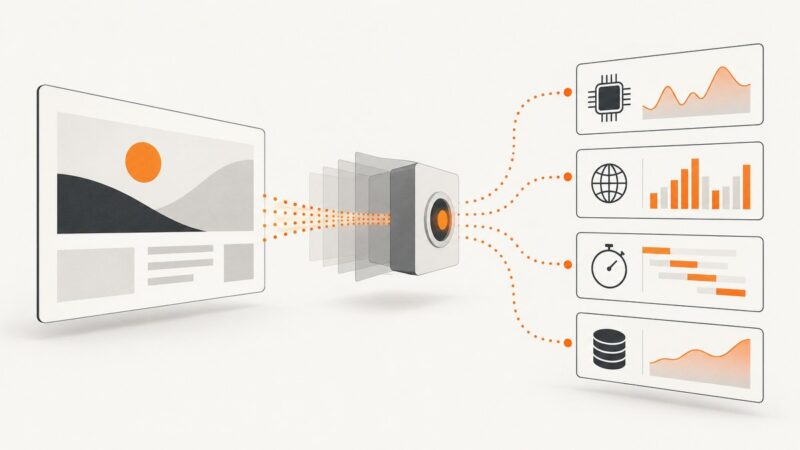
For visual regressions, capture the relevant page or component in each selected state and compare like with like: same viewport, data, theme, and interaction setup. A screenshot can help reveal missing feedback, overlapping content, or layout shifts. It does not prove that a control works, that an event sequence is correct, or that a page is accessible; keep behavioral assertions and accessibility evaluation in the test plan.
For a repeatable browser-based workflow, establish the state first, wait for the expected content, then capture. Keep dynamic content, timestamps, and animations controlled where possible so image differences reflect meaningful changes.
Or skip the browser setup
ScreenshotNeo is a website screenshot API and MCP server for developers. One GET request captures a URL as PNG, JPEG, WebP, or PDF; the API documentation describes the available parameters.
curl -G "https://api.screenshotneo.com/v1/shot" -d access_key=YOUR_API_KEY --data-urlencode url=https://stripe.com -o shot.webpimport requests
r = requests.get("https://api.screenshotneo.com/v1/shot", params={"access_key": "YOUR_API_KEY", "url": "https://stripe.com"}, timeout=90)
open("shot.webp", "wb").write(r.content)const q = new URLSearchParams({ access_key: 'YOUR_API_KEY', url: 'https://stripe.com' });
const res = await fetch(`https://api.screenshotneo.com/v1/shot?${q}`);Cookie banners are accepted and removed before the shot, along with known consent platforms, newsletter popups, and chat widgets. Bot checks, blank pages, timeouts, failed loads, and cache hits cost nothing, and response headers identify the page verdict and billing status. An MCP server lets AI agents use screenshot, page-info, and PDF-capture tools. The free plan includes 1,000 screenshots a month with no card; paid plans start at $5 for 3,000. See ScreenshotNeo for details, or sign up for 1,000 free screenshots a month with no card.
Troubleshooting state coverage
The suite passes, but users still find state-specific bugs
Cause: Tests may cover default states but omit a relevant factor, transition, or event order. Fix: Reconstruct the user path that exposed the bug, add it as a repeatable case, and update the state and factor inventory. Consider stronger interaction coverage if several conditions contributed.
Pairwise coverage did not catch an interaction bug
Cause: The failure may depend on three or more conditions, or on ordering that the combination model does not represent. Fix: Add a targeted higher-order case or explicit ordered sequence based on the failure mechanism. Pairwise coverage is not exhaustive.
A test is flaky because it captures too early
Cause: The page or component has not reached the expected state when the assertion or screenshot runs. Fix: Wait for a meaningful state or selector, stabilize test data and network dependencies where practical, and avoid relying only on a fixed delay when a state-based condition is available.
Visual comparisons fail on irrelevant differences
Cause: Dynamic content, animation, viewport changes, or inconsistent state setup can alter pixels. Fix: Match the environment and data, wait for stable content, and control known dynamic regions where appropriate. Review whether the change is a real regression before updating expectations.
Automated checks pass but keyboard or assistive technology use is confusing
Cause: The test oracle may only check technical outcomes and miss qualitative usability problems. Fix: Include keyboard and representative assistive technology evaluation, and assess whether focus and state changes are understandable to users.
Performance, reliability, and cost
Exhaustively testing every combination can make execution and maintenance impractical as factors and values grow. Combinatorial selection can reduce test-set size while covering chosen interaction strengths, but it does not establish a universal UI-specific cost threshold or guarantee defect detection. Prioritize cases by likelihood, consequence, and evidence from the feature’s history.
For reliable results, make each case’s initial state explicit, avoid accidental dependence on test order, and record the event sequence needed to reproduce failures. Separate fast, high-value checks from broader or manual evaluation if running everything on every change becomes costly. Revisit coverage when the feature or its risks change.
Frequently asked questions
Does testing more UI states always improve quality?
No. More cases help when they cover meaningful conditions or sequences, but redundant or brittle tests can add maintenance without useful coverage. Choose states based on tasks and risk.
Is pairwise testing enough for a UI?
It is a useful starting point for interactions among factors, but not a guarantee. Add higher-order combinations or ordered event tests when the feature’s risks call for them.
Can screenshots replace interaction tests?
No. Screenshots help inspect visual outcomes in selected states. They do not establish that actions, transitions, or accessible interaction work correctly.
Does WCAG 3.0 in this article describe a final standard?
No. The cited May 16, 2024 document is a Working Draft. Consult the W3C source for its status and scope.
Sources
- NIST, Combinatorial Testing — combinatorial coverage rationale and reported study summary.
- NIST, Ordered t-way Combinations for Testing State-Based Systems (2022) — state and event-order coverage.
- W3C, WCAG 3.0 Working Draft, May 16, 2024 — test scopes, qualitative evaluation, component states, and input methods.