Generate Shareable Achievement Badges From Webhooks
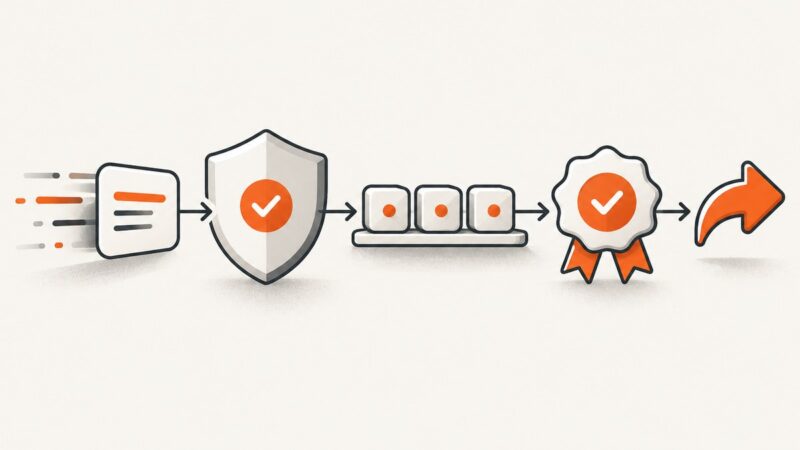
Build a reliable webhook pipeline that verifies events, prevents duplicates, issues Open Badges, and delivers a shareable verification URL.
Blog
How to take clean screenshots, turn HTML into images and PDFs, run headless browsers, and give AI agents eyes. Written by the team that builds ScreenshotNeo.
Build a reliable webhook pipeline that verifies events, prevents duplicates, issues Open Badges, and delivers a shareable verification URL.
Compare five GetScreenshot alternatives for Zapier, learn when to use a native app or webhook, and connect screenshot results to the rest of your workflow.
Cloudflare Error 521 means the origin refused Cloudflare’s connection. Follow this recovery checklist to find the failing service, firewall, port, TLS setting, or intermediary.
Build a traceable Reddit summarizer with authorized access, claim-level citations, deletion handling, and quality checks.
A headless browser runs without a visible UI. Learn how it works, when to use it, and how Playwright, Puppeteer, Selenium, Cypress, and Browserless differ.
Learn why HTTP 416 happens, how to read Content-Range, fix stale offsets, and build reliable resume logic in cURL, Python, and Node.js.
Compare five CMS detection tools by browser workflow, APIs, coverage, batch research, evidence, pricing, and practical limits.
Prepare for Angular interviews with 49 practical questions covering components, signals, DI, forms, routing, SSR, testing, performance, and upgrades.
HTTP 428 means an API requires a conditional request. Learn how to use ETags, fix 428 versus 412, and prevent lost updates.
A 499 usually means the client closed its connection before the server finished. Learn how to trace the request, distinguish cancellations from slow origins, and reduce avoidable occurrences.
HTTP 418 is a joke status code from RFC 2324. Learn its meaning, history, 503 comparison, bot use, debugging steps, and code examples.
Learn five coding concepts that make no-code workflows easier to build and debug: data types, JSON, control flow, functions, and APIs.
Learn how browser extensions connect AI agents to pages and logged-in sessions, how permissions and prompt injection work, and how to test safely.
Build a browser agent locally with Playwright, then decide when a hosted free tier is worth the tradeoffs. Includes runnable code, safety checks, and troubleshooting.
Capture and verify localized pages from 49 countries with browser routing, locale controls, diagnostics, provider comparisons and runnable code.
Compare Scrapy, Apify, Octoparse, ParseHub and Bright Data by control, scale, dynamic pages, maintenance, exports and cost.
Compare five online DNS lookup tools, learn how to check A, MX, TXT, NS and DNSSEC records, and troubleshoot changes that have not appeared yet.
Compare seven mobile and 4G proxy providers by targeting, sessions, price, tooling, support, and sourcing so you can choose the right fit.