How to Set PDF Paper Size, Margins, and Orientation with an API
Set PDF page size, margins, and orientation through your API’s documented options. Learn how to handle custom dimensions, CSS page rules, clipping, and common layout issues.
Blog
How to take clean screenshots, turn HTML into images and PDFs, run headless browsers, and give AI agents eyes. Written by the team that builds ScreenshotNeo.
Set PDF page size, margins, and orientation through your API’s documented options. Learn how to handle custom dimensions, CSS page rules, clipping, and common layout issues.
Build a production-ready Django URL shortener with validation, collision-safe codes, redirects, security controls, analytics, and deployment guidance.
Sanity’s Presentation Tool provides a live, clickable website preview—not a saved screenshot. Learn which workflow fits and how to capture an image separately.
Build a reliable Flask callback receiver that validates crawler events, stores them in MySQL, and hands slow work to a durable worker queue.
Build a bounded computer-use loop that observes a browser, executes approved actions, and verifies results. Includes code, safety controls, and troubleshooting.
Fetch multiple web pages concurrently with Python asyncio and aiohttp, parse their HTML, and handle limits, errors, retries, and memory safely.
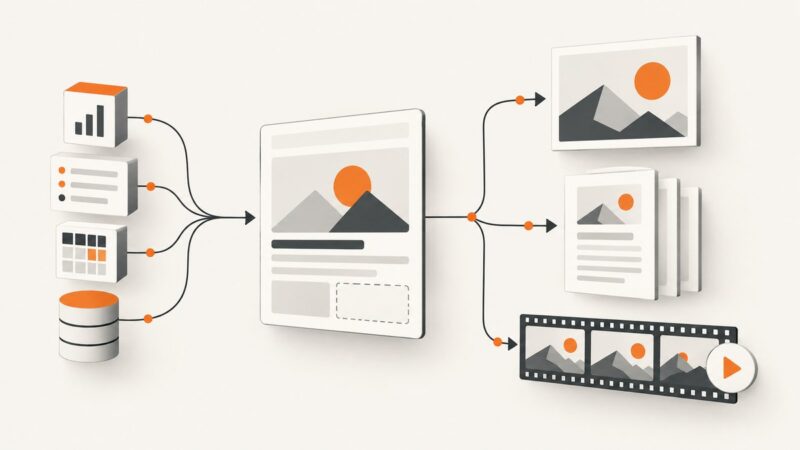
Build a reusable template, map data into its fields, and render images, PDFs, or videos through an API. Here’s a practical workflow, runnable examples, and provider guidance.
Capture a website manually or in code with free tools, APIs, full-page options, troubleshooting, and a practical ScreenshotNeo workflow.
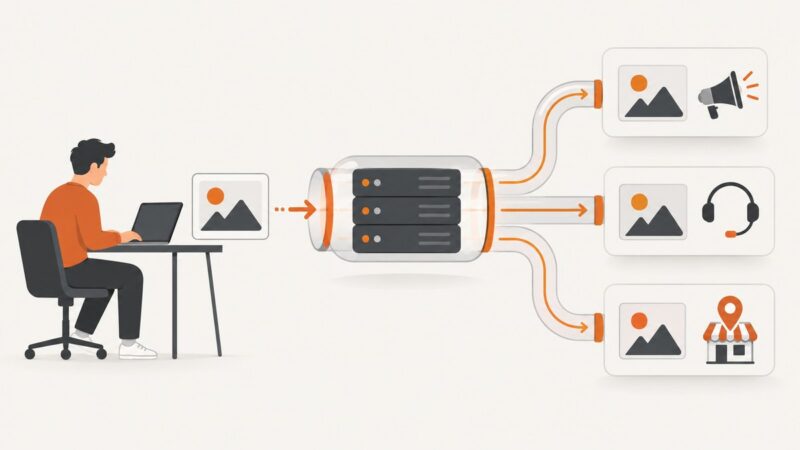
A practical guide to uploading, replacing, processing, and deleting brand images across Apple Ads, Zendesk, and Google Business Profile APIs.
Compare GraphQL and REST for permitted web data collection, with working queries, pagination, limits, retries, and a practical decision guide.
Connect an AI agent to an image-generation API with MCP: architecture, transports, tool design, image outputs, security, code, and troubleshooting.
Learn how web scraping APIs render JavaScript, handle blocks, return structured data, control cost, and support compliant production workflows.
Stop form spam with layered defenses: server-side verification, rate limits, WAF rules, honeypots, moderation, and monitoring.
Connect an AI agent to a hosted browser, choose a deployment pattern, and handle sessions, compatibility, security, debugging, and screenshots.
Four web-scraping business models, validation steps, code, legal checks, and a practical path from scripts to maintained data products.
Compare search results with model-ready context, then choose a retrieval workflow that fits your agent, attribution needs, and budget.
cURL can download image files, but it cannot render a webpage. Learn when to use cwebp, when to use Playwright, and how to save a rendered page as WebP.
Learn how to collect structured search results with APIs, paginate safely, handle quotas, compare providers, and build reliable production pipelines.