How to Convert a Web Page to PDF in C#
Learn how to convert any rendered web page to PDF in C# with Playwright .NET or WebView2, including print CSS, dynamic content, margins, troubleshooting, and a hosted API option.
Learn how to convert any rendered web page to PDF in C# with Playwright .NET or WebView2, including print CSS, dynamic content, margins, troubleshooting, and a hosted API option.
Generate reliable PDFs with Node.js and Puppeteer, including A4 sizing, print CSS, fonts, headers, page ranges, troubleshooting, and production patterns.
Generate a PDF in Python, upload it to S3 and return a shareable URL. Learn when to use a temporary presigned link, how to handle uploads, and what can go wrong.
Generate PDFs from authenticated pages in Ruby with cookies, Basic Auth, Rails responses, browser renderers, troubleshooting, and secure production patterns.
Convert a URL to PDF in Kotlin with Android WebView and PrintManager, handle JavaScript and print limits, or use ScreenshotNeo for one-call capture.
Render a PDF in PHP with Dompdf, store it privately, and create a time-limited signed link anyone with the URL can use.
Use Go with chromedp and headless Chrome to render a web page as a PDF, wait for dynamic content, configure print output, and handle common failures.
Generate a PDF from a URL or HTML in PHP with Browsershot and headless Chrome. Configure page layout, handle trusted inputs, and compare a PHP library with a hosted screenshot API.
Guzzle sends HTTP requests; a PDF renderer creates the document. Learn how to fetch HTML, choose full-height behavior, render reliably, and automate captures.
Learn how to encrypt PDFs in Python with ReportLab or pypdf, choose AES safely, set permissions, troubleshoot failures, and automate protected output.
Password-protect and restrict a generated PDF with Apache PDFBox, with complete Java code, permissions, compatibility notes, and troubleshooting.
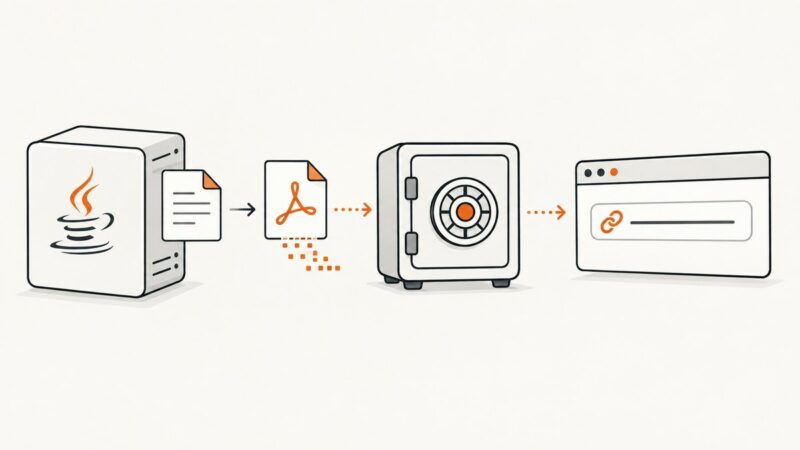
Create a PDF with Java and PDFBox, store it safely, and serve an authorized URL from Spring Boot with streaming and production safeguards.
Choose between one continuous tall page and standard pagination, then generate the PDF with Puppeteer or PDFKit. Includes runnable Node.js examples and fixes for common layout problems.
Use Playwright for Python to load or inject a remote JavaScript file, wait for the page to finish rendering, and save the result as a PDF.
Save a selected webpage section or specific print pages as a PDF with browser steps, automation code, troubleshooting, and ScreenshotNeo.
Use HexaPDF for strong PDF encryption in Ruby, understand Prawn’s limits, and avoid common password and reader-compatibility mistakes.
Use mPDF’s PDF-aware encryption API to require an opening password, set reader permissions, and avoid common compatibility and security mistakes.
Compare PDFKit, pdf-lib and Puppeteer, then build, edit and print PDFs with complete Node.js and TypeScript examples.